The Historic Mindlessness of Americans
"American politicians routinely describe Iran as a rogue state, an irrational actor, an existential threat. What they rarely do is connect that behavior to its historical origins, because doing so would require a reckoning with American responsibility that domestic politics makes nearly impossible."

“The Middle East was remade by strangers who did not understand it, and it has been paying the price ever since.” - David Fromkin, author, A Peace to End All Peace

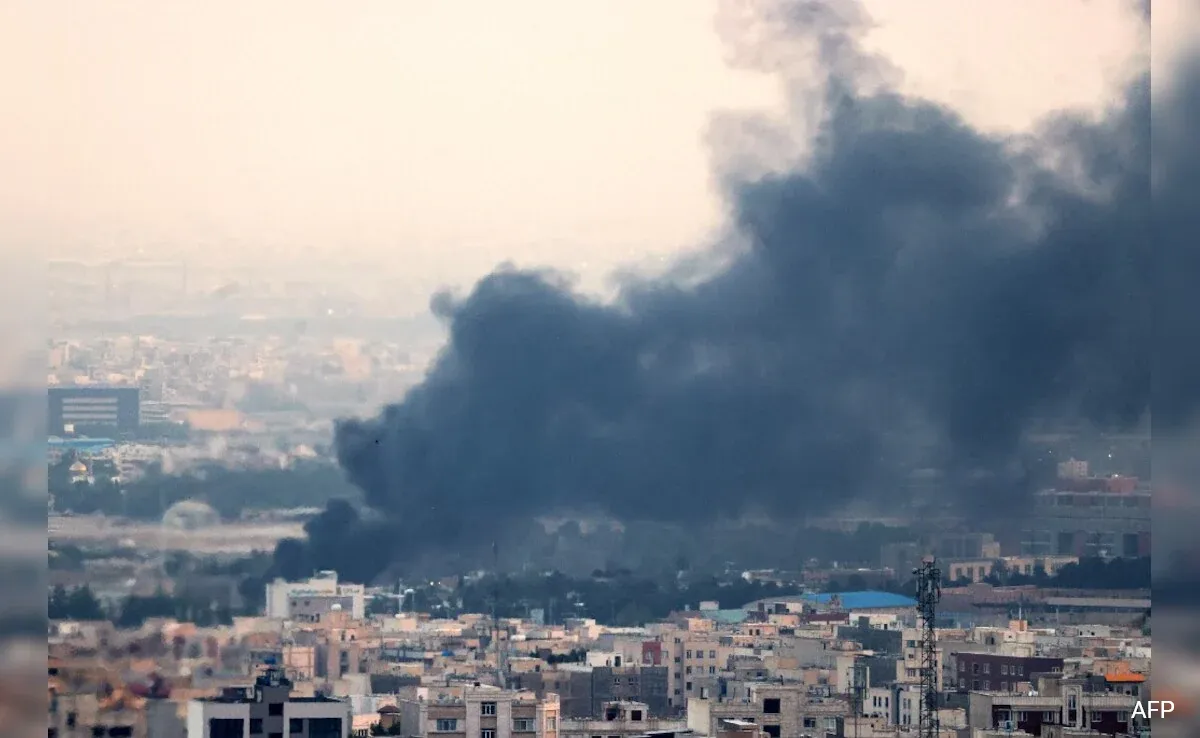
The U.S. bombs and missiles falling on Iran from Trump’s assault were actually launched on a sweltering summer day in Tehran, 1953, when an American operative named Kermit Roosevelt Jr., grandson of Theodore, slipped into the country under a false identity and proceeded to dismantle one of the most promising democratic experiments the Middle East had ever produced. The operation, codenamed AJAX by the Americans and BOOT by the British, toppled the government of Prime Minister Mohammad Mosaddegh, a Harvard-educated nationalist who had committed the unforgivable sin, in Western eyes, of nationalizing Iran’s oil industry. For Mosaddegh, oil belonged to the Iranian people. For London and Washington, it belonged to whoever had the power to take it.
And we did.
Mosaddegh had been named Time magazine’s Man of the Year in 1951. He was a democrat in a region where democracy was rare, a secularist who governed through parliament, and a man who wept openly in public, which his countrymen found endearing rather than weak. He was exactly the kind of leader a genuinely freedom-loving foreign policy by the U.S. should have supported. Instead, the Eisenhower administration, persuaded by British interests and Cold War anxieties, authorized his removal. Roosevelt bribed Iranian military officers, hired street thugs to pose as Mosaddegh supporters committing acts of violence, and manufactured the chaos necessary to justify a coup. The elected government fell in only three days.
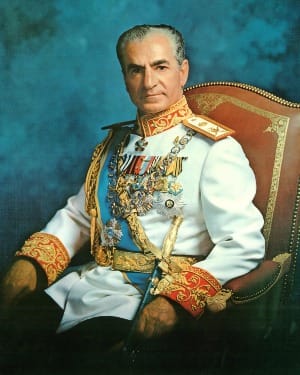
In Mosaddegh’s place, the West restored Mohammad Reza Shah Pahlavi to a Peacock Throne, the monarch who had fled the country in panic during the crisis and who understood, with perfect clarity, that he owed his crown to Washington. The Shah proved to be a willing instrument. Within months of his restoration, a new oil consortium was negotiated that handed American and British companies the lion’s share of Iranian petroleum extraction. The nationalization Mosaddegh had fought for was reversed. Iran’s oil fields, including the vast and lucrative reserves that had animated the entire crisis, were reopened to foreign exploitation on terms favorable to the West, with the Shah collecting royalties as a kind of managerial fee for his own country’s resources. I’ve always considered it colonialism wearing a business suit.

What followed was twenty-five years of authoritarian rule, underwritten by American tax money, American weapons, and American political cover. The Shah modernized Iran in certain superficial ways, building universities and infrastructure, advancing some rights for women, and projecting an image of secular progressivism for Western consumption. But the glittering surface was a fraudulent cover for a regime sustained by terror. The instrument of that terror was SAVAK, the Iranian secret police, established in 1957 with direct assistance from both the CIA and Israel’s Mossad. SAVAK did far more than just surveil dissidents. It arrested them, tortured them in documented and systematic ways, and made them disappear. Amnesty International described Iran in the 1970s as having one of the worst human rights records on earth.
And my university helped to facilitate the horrors.
American classrooms do not discuss, nor do its citizens retain the memory or knowledge of the degree to which the United States was not merely tolerant of the Shah’s brutality but actively complicit in training its practitioners. The CIA provided SAVAK with intelligence methods and interrogation frameworks. More specifically, and more damningly, Michigan State University ran a covert program from the late 1950s through the 1960s under which American academics, some wittingly and some not, served as cover for CIA officers who trained Iranian police in the methods of political repression. This program was eventually exposed by investigative journalists and illustrated how American institutions of learning could be conscripted into the service of empire. MSU’s professors published papers. The spies taught torture.
American policymakers knew. They knew, and made a calculation that stability, oil, and a bulwark against Soviet influence were worth more than Iranian lives or Iranian democracy. That calculation was not irrational from a narrow strategic standpoint, a concesson that’s hard to make. It was, however, profoundly shortsighted, and the bill eventually came due in the form of the Islamic Revolution of 1979.
The revolution did not emerge from nowhere. It was the accumulated consequence of twenty-six years of humiliation, repression, and stolen sovereignty. When Ayatollah Ruhollah Khomeini channeled the rage of the Iranian street and Iranians stormed the U.S. Embassy, he was harvesting a crop that Kermit Roosevelt had planted in 1953. The theocracy that took power was not an inevitability of Iranian culture or Islam. It was the consequence of American and British meddling.
Iran had a secular, democratic tradition, however briefly it had been allowed to flourish. What the revolution represented was what happens to a nation when its moderate democratic voices are imprisoned and tortured while its religious institutions, operating from mosques the Shah could not fully control, become the only available space for organized opposition. The United States did not simply lose a client state in 1979; it reaped what it had sown, and the Iranian people, caught between an American-backed dictatorship and a theocratic revolution, paid the steepest price of all. And they continue to suffer under religious and geo-political madness.
The hostage crisis, the proxy conflicts, the sanctions regime, the nuclear standoff — all of it flows downstream from that summer coup. American politicians routinely describe Iran as a rogue state, an irrational actor, an existential threat. What they rarely do is connect that behavior to its historical origins, because doing so would require a reckoning with American responsibility that domestic politics makes nearly impossible. My guess is that more than half of the citizens of this country could not find Iran on a map, which means they certainly do not have context for the hypocrisies and ironies currently exhibited by their president and his administration.
This brings me to the nuclear question, and to an asymmetry so glaring it has become almost invisible through familiarity. The United States has spent decades insisting, with escalating pressure up to and including military threats, that Iran must not be permitted to develop nuclear weapons. This is framed as a matter of global security and non-proliferation norms. Yet the United States maintains a close strategic alliance with Israel, a country that possesses an estimated 80 to 400 nuclear warheads, has never acknowledged their existence in any official capacity, has refused to sign the Nuclear Non-Proliferation Treaty, and has not submitted to international inspection. Israel’s nuclear arsenal is one of the world’s worst-kept secrets and one of its most consequential diplomatic hypocrisies. The doctrine of deliberate ambiguity, under which Israel neither confirms nor denies its weapons, has been maintained for decades with American acquiescence. Should Israel decide to nuke Iran, conservative politicians and evangelicals in this country would shrug and repeat their mantra used to justify genocide in Gaza or murder on the West Bank, “Israel has a right to defend itself.”
Not, however, Iran.
The message this sends to Iran, and to the broader world, is not subtle. One country in the Middle East is permitted to possess nuclear weapons outside any international framework, in defiance of the non-proliferation norms Washington claims to champion, and that country receives billions of dollars annually in American military aid and unshakeable diplomatic and military protection. Another country in the same region is subjected to crippling sanctions, the threat of military strikes, and repeated assertions that its very attempt to develop similar capabilities represents an intolerable danger. Whatever your view of the Iranian government, the double standard is difficult to defend on principled grounds. I find it explicable only as an expression of alliance politics, not law or logic.
The American relationship with Israel is, of course, deeply complex, rooted in genuine historical sympathy for the Jewish people following the Holocaust, sustained by powerful domestic political constituencies, and reinforced by shared intelligence and military interests. But there is a theological dimension to this alliance that American political discourse is poorly equipped to examine honestly, and never does. A significant portion of the American political base, particularly evangelical Christians, supports Israel not merely on strategic grounds but on explicitly religious ones, bound up in eschatological beliefs about the End Times and the role of a Jewish state in biblical prophecy. This gives American support for Israel a character that is not purely secular foreign policy but is, in part, religiously motivated statecraft, which is precisely what Americans claim to find alarming about Iranian governance.
Iran is routinely and accurately described as a theocracy, a state whose policies are determined in significant measure by clerical authorities and religious doctrine. This is offered as evidence of its irrationality and danger. Yet American policy toward the Middle East has itself been shaped by religious conviction at the highest levels of government, from politicians who speak openly about biblical prophecy to a foreign policy consensus so thoroughly shaped by religious lobbying that it resists strategic adjustment even when American interests would seem to demand such alterations. Both countries have governments suffused with religion. Only one of them is expected to apologize for it.
The question I personally see now emerging in foreign policy circles, rarely asked aloud but increasingly present, is whether the West might once again attempt to install a friendly face in Tehran should the current government fall. Reza Pahlavi, the son of the last Shah, lives in the United States, maintains a visible public profile, and has spoken about the democratic future of Iran with a fluency designed to appeal to Western audiences. He is in many respects a familiar figure, the exiled prince who represents continuity with a pre-revolutionary past that some Iranians, particularly older ones, remember with complicated nostalgia. Should the Islamic Republic collapse under the weight of economic sanctions, popular protest, American bombs, or internal fracture, there would almost certainly be voices in Washington and Tel Aviv and London suggesting that Pahlavi represents a stable, Western-friendly alternative, a refurbished puppet for our time.
In every essential way, this would be a repetition of 1953. The son installed where the father was installed, through whatever combination of foreign support, intelligence operation, and manufactured legitimacy the moment allows. It might work in the short term, as it did before. The Shah’s regime lasted twenty-five years. But the conditions that made the Islamic Revolution inevitable would reassert themselves, because the underlying problem would be the same as what Kermit Roosevelt left Iranians. They would be living under a government whose legitimacy derived not from Iranian consent but from foreign patronage, serving foreign interests in exchange for the trappings of power. The Iranians who would oppose such a government would once again be imprisoned, and the mosque would once again become the organizing space of resistance, and the revolution, when it came, would once again be angrier and more extreme than the one before it.
We can only learn from history if we pay attention to its consequences.
What was lost in 1953 is impossible to measure. Iran had a functioning parliament, a free press, a tradition of secular nationalism, a leader of genuine democratic conviction. I do not think it romantic to suggest that, left to its own political evolution, Iran might have developed into something broadly resembling a constitutional democracy, imperfect and messy, like ours, but legitimate. The Cold War logic that made Mosaddegh’s nationalization seem threatening now translates as a catastrophic misreading of the situation. His government was not a Soviet project. He was an Iranian nationalist who wanted his nation’s resources for its people. The British and Americans could not accept that, and what they purchased with his removal was a generation of stability followed by decades of conflict.
The United States is not a victim of Iranian hostility, but is, in a very precise historical sense, a casualty of its own choices, made by men who were convinced they were being shrewd, and who handed future generations a problem they lacked the wisdom to solve. A new group of men is making a new series of similar bad decisions. There is presently no visible path forward, but, if one exists, it almost certainly involves acknowledging our history as a precondition for mutual respect. No durable diplomatic relationship is possible without such recognition. American political culture may be unable to agree to such a reconciliation. Our solution tends not vary.
We attack and destroy and kill.