Theocracy on the March
If you can't get the public to join your religion, let the state take your religion to children.

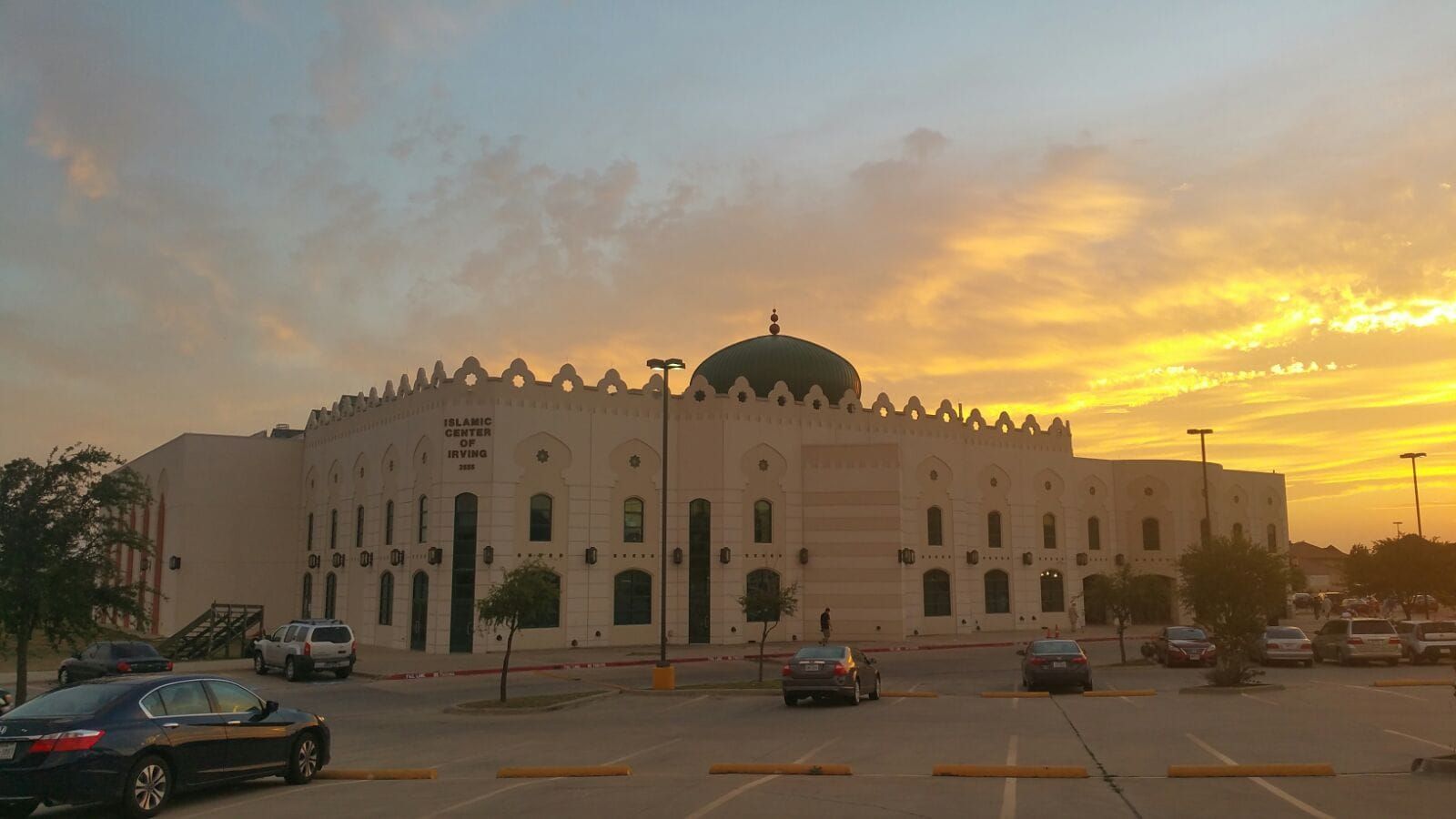
There is a sad, dangerous, yet entertaining bit of spectacle playing out in Texas, and I fear, as is often the case, it will inform the politics and policies of the rest of the U.S. The State Board of Education (SBOE) is poised to vote on requiring public school children to read from the Bible, and a governor named Greg Abbott has signed a law banning what he calls “Sharia compounds” while simultaneously ordering the installation of Christian commandments on the walls of taxpayer-funded classrooms. I suspect it’s inaccurate to call that contrast ironic but it is hypocritically comic. Unfortunately, it’s being acted out on the backs of five million schoolchildren and has become the desperate liturgy of an institution losing its hold on the culture, performing its rituals more loudly because fewer people are listening.
To be more specific, Texas is quietly dismantling the First Amendment. The State Board of Education is preparing to vote on a mandatory reading list, part of about 200 passages that could become required reading in kindergarten through high school, with a reliance on Christian perspectives and no clear guidance on how to place the stories in historical or devotional context. Six-year-old children will be read picture books titled “Noah’s Ark” and “David and Goliath” in their English classes. High schoolers will be assigned the second chapter of Genesis, the one where God makes a woman from a man’s rib and calls her a “helper that was just right for him.” Moses will be taught not as the protagonist of a Bronze Age narrative of uncertain historical provenance, but as a figure of established fact, a man who parted seas and received the direct dictation of the Almighty on a mountaintop. Instead of education, this is Sunday school with a curriculum code attached.
Mark Chancey, a religious studies professor at Southern Methodist University, told a Fort Worth TV station that the problem was not that the lessons were about religion. “The problem,” he said, “is the particular way in which these lessons teach about religion. These are lessons that play religious favorites, and that’s not what public schools should do.” One board member, a Democrat, noted that the inclusion of other religions in the materials was not an “adequate attempt to change that bias.” She was right. There is no Quran on the list. No Talmud. No Upanishads. No Tao Te Ching. Just the King James Bible and the English Standard Version, both of them distinctly Protestant texts, being inserted into the instruction of children whose families pray in mosques, synagogues, temples, and the great secular cathedral of the living room on a Sunday morning. Church and state are no longer separated in Texas; they are now conjoined twins.
Unless, of course, you are Muslim. Thirty minutes northeast of Dallas, a group of Muslim Americans has been trying to build a neighborhood. The East Plano Islamic Center proposed EPIC City, which is 402 acres, more than a thousand homes, a K-12 school, a mosque, a community college, sports facilities, and retail shops. But Governor Greg Abbott doesn’t like their religion so he has vowed to stop the project and signed a law “banning Sharia compounds in Texas.” He ordered a blitz of investigations by various state agencies into the mosque and the development, while Attorney General Ken Paxton filed two lawsuits aimed at ending the project. However, there are no indications that the organizers of EPIC City intend to operate under Sharia law. The corporation managing the development, Community Capital Partners, agreed to abide by the Texas Fair Housing Act and implement fair housing policies. A federal investigation launched at the request of Senator John Cornyn found no violations and was closed without action.
The developers said the community would be open to non-Muslims and that it would follow Texas law. They said that, repeatedly, to anyone who would listen. Imam Nadim Bashir, a Florida and Texas native who leads the EPIC mosque, told The New York Times that Abbott had created “unnecessary fear,” based on misunderstandings about Sharia. None of that mattered, though. The Sharia-Free Caucus in the Texas House boasts 38 members, all Republicans, led by Rep. Brent Money, who put out a statement declaring, “We will not stand idly by as Islamic influences seek to transform our great state into another conquered territory.” Muslim families building a neighborhood look to these men in the legislature like an invasion. An occupation. A civilizational threat requiring legislative warfare and multiple simultaneous investigations by the full apparatus of state power.
Certain invaders are welcome, though, if they worship the right deity and know how to ignore what is preached. Greg Abbott, on June 22nd of last year, had not noticed that an author of a bill had tucked into the state’s $338 billion budget a $60 million provision to allow Texas to participate in the federal Summer EBT program. The Summer Electronic Benefits Transfer program would have given qualifying families $120 per child to pay for lunches during the summer months. An estimated 3.75 million children statewide would have qualified. Abbott vetoed it, the only budget item the Republican governor vetoed out of a $338 billion document. The sole excision. The single line he found intolerable. Not a weapons contract or a pork barrel highway project. Food for hungry children during the summer. That was the thing the Texas governor could not abide.
Christina Morales, a Texas Democratic Representative, said, “Abbott just slammed the door on hungry Texas kids by vetoing summer lunch funding. This decision to hide behind federal uncertainty is morally bankrupt and shows he’s completely out of touch with struggling families across our state.”
The Christianity of Greg Abbott involves Bibles on classroom walls along with hunger for three and a half million children during the months when school cafeterias go dark. The man who would instruct a six-year-old in the Golden Rule would not spend sixty million dollars to make sure that same child could eat a meal in July.
The late Christopher Hitchens, who had the most magnificent contempt for exactly this kind of performative piety, observed that religion comes from “the bawling and fearful infancy of our species, and is a babyish attempt to meet our inescapable demand for knowledge.” He noted with characteristic precision that “the least educated of my children knows much more about the natural order than any of the founders of religion.” He was not being cruel, just accurate.
The texts that Texas now proposes to use as the spine of public school English instruction were composed by people who believed the earth was flat, that disease was divine punishment, slavery was acceptable, and women were property derived from a spare rib and should be subservient to their husbands. These are not peripheral curiosities of the scripture. They are its architecture. To call Moses a historical figure in a public school classroom is to do something pedagogically dishonest and constitutionally dubious. Moses may have existed, but not likely, historians argue. What historians do not argue is that he parted the Red Sea because there is no evidence that he did. The evidence for that is exactly the same as the evidence for the resurrection of Jesus Christ, which is none.
Sam Harris, in “The End of Faith,” put the proposition cleanly enough that it bears repetition in any discussion of state-sponsored theology. He wrote that religion “allows people to believe en masse what only idiots or lunatics could believe in isolation.” He was pointing to the peculiar social contract of faith, the way that communal belief insulates individual credulity from ordinary scrutiny. Tell a man his wife is cheating on him, Harris noted, and he demands evidence. Tell him the creator of a 14-billion-year-old universe sent his only son to be tortured to death for the sins of creatures on one infinitesimally small planet, then rose from the dead three days later, and evidence is suddenly beside the point. It is enough that the community believes it. It is enough that it is old.
These fanciful stories from the ancients are losing their grip on the young, and this is surely part of what is driving the Christian frenzy in Austin and Washington. There has been a 17-percent drop in the number of U.S. adults who say religion is an important part of their daily life between 2015, when it was 66 percent, and 2025, when it is 49 percent, according to recent Gallup polls. This is the largest Gallup has recorded in any country over any 10-year period since 2007. The percentage of Americans claiming no faith, a group known as the nones, nearly doubled in size from 2007 to 2022, going from 16% to 31%. Among liberals, 51% now say they have no religion, and only 37% identify as Christian, down from 62% in 2007.
The institutional church is not dying. But it is shrinking, and it knows it, and what you are watching in Texas is the political expression of that knowledge. When institutions feel their authority slipping, they reach for the law and then the classroom. Finally, they reach for the children. The Inquisition understood that much. The medieval papacy understood it. Greg Abbott, who is not a subtle man, understands it in his own base way. You cannot win the culture through persuasion when the culture is walking away. But you can mandate attendance. You can put the commandments on the wall. You can make a six-year-old read about Noah’s Ark in English class and call it “classical education.” And then maybe tell that child about the lunatics who are tunneling into Mt. Ararat in Turkey, convinced they have found the petrified bones of the ark.
Hitchens, whose absence from this world is an incalculable intellectual loss, also noted, with the acuity that made him so infuriating to the devout, that “what kind of designer or creator only chooses to reveal himself to semi-stupefied peasants in desert regions?” This is a question that ought to be asked in every Texas classroom that is about to receive a King James Bible as a primary educational text. The God of Abraham made himself known to illiterate herders in the ancient Near East, spoke through burning shrubbery, and arranged for his moral code to be chiseled into stone tablets on a mountain, and this is what the Texas State Board of Education, in the year 2026, has decided the children of Houston and El Paso and McAllen need to absorb as foundational knowledge. Meanwhile, the sixth-grade world cultures course that once introduced those same children to the civilizations of China, India, and Mesoamerica is being eliminated.
The virus, unstopped, will continue to spread East of the Sabine and North of the Red River until all of America is speaking in tongues like Trump’s religious counselor.
Senior Advisor to the White House Faith Office speaking in a language that evidently only Trump understands.
Greg Abbott signs a law against “Sharia compounds” because, he says, Texas will not tolerate a religion using property and community to impose its law on its residents. Then he installs the Ten Commandments, the explicit legislative code of a specific religion, on the walls of classrooms attended by children who did not choose to be there. Abbott panics about a mosque at the center of a Muslim neighborhood and deploys twelve state agencies against it. Then he calls a Catholic school’s presence at the center of a Catholic neighborhood “education.” The Cato Institute, not exactly an institution known for left-wing sentiment, noted that the Muslim-majority world itself is “considerably secular” and that fearing Sharia rule in America, “whose tiny Muslim minority makes up only 1” percent of the population, requires an elaborate departure from observable reality. That should be one of Abbott’s campaign bumper stickers: Vote for Elaborate Departure from Observable Reality.
But observable reality is certainly not the currency of this transaction. Fear is the currency, and, as any competent demagogue knows, is most effectively manufactured by pointing at the stranger.
Donald Trump must also be mentioned because the evangelical Christians of Texas, the voters who put Greg Abbott in the governor’s mansion and keep him there, who weep at revival meetings and demand the Bible in schoolrooms and call themselves soldiers in a culture war for the soul of the nation, gave their near-unanimous political devotion to a man who has been found civilly liable for sexual abuse by a federal jury, convicted of 34 felony counts of falsifying business records, who paid hush money to a pornographic film actress while his third wife was pregnant with his fifth child, who dismantled USAID and cut off food and medicine to millions of the world’s poorest people, and who told American evangelicals what they wanted to hear about Jerusalem and abortion and the godless left while running casinos, cheating contractors, and lying with the casual fluency of a man who has never needed to tell the truth to get what he wants.
That is the Christianity of the Texas Republican Party. Not the Sermon on the Mount or the feeding of the five thousand with loaves and fishes. They probably have never even heard the phrase “whatever you do unto the least of these, you do unto me.” They are more comfortable at a convicted rapist’s campaign rally with a cross on the stage.
Sam Harris, scientist, intellect, author, researcher, wrote that our world is “fast succumbing to the activities of men and women who would stake the future of our species on beliefs that should not survive an elementary school education.” He wrote that in 2004. Texas is now making it curriculum, and our only hope is that elementary children are smart enough to reject the idiocy.
Hitchens, in one of his most devastating formulations, observed that “the person who is certain, and who claims divine warrant for his certainty, belongs now to the infancy of our species. It may be a long farewell, but it has begun and, like all farewells, should not be protracted.”
The farewell has begun but religion’s recessional from the stage of American politics is much too pedestrian. Still, nearly a third of Americans now claim no religious affiliation. The young, by every measure available, are leaving the pews faster than the faithful can reproduce. The theocratic turn in Texas politics is not a sign of Christian strength but an indication of Christian panic. You do not need to put your sacred text on classroom walls when your culture already believes it. You mandate it when the culture is drifting away. You fund investigations of mosques when you need a visible enemy to hold the coalition together. You call a Muslim neighborhood a Sharia city because your voters need something to fear, and the old fears are wearing out.
There is a word for governing a pluralistic, constitutional democracy by the religious standards of one faith while persecuting adherents of another and it’s a word that makes Americans uncomfortable, because we were taught that it could never happen here. Texas and Trump are making a strong argument for updating that lesson plan. Though perhaps not the way they intend.