To Be American
"The funnel came close enough for winds to destroy the wood-frame house and lift some of its sleeping occupants into the night sky. Elizabeth and Hope, two of Father’s sisters, were found still lying on their mattress almost a quarter mile from their bedroom."

Father’s“There’s a promise in the air, a chance to reach the horizon if we just keep moving.” - John Steinbeck

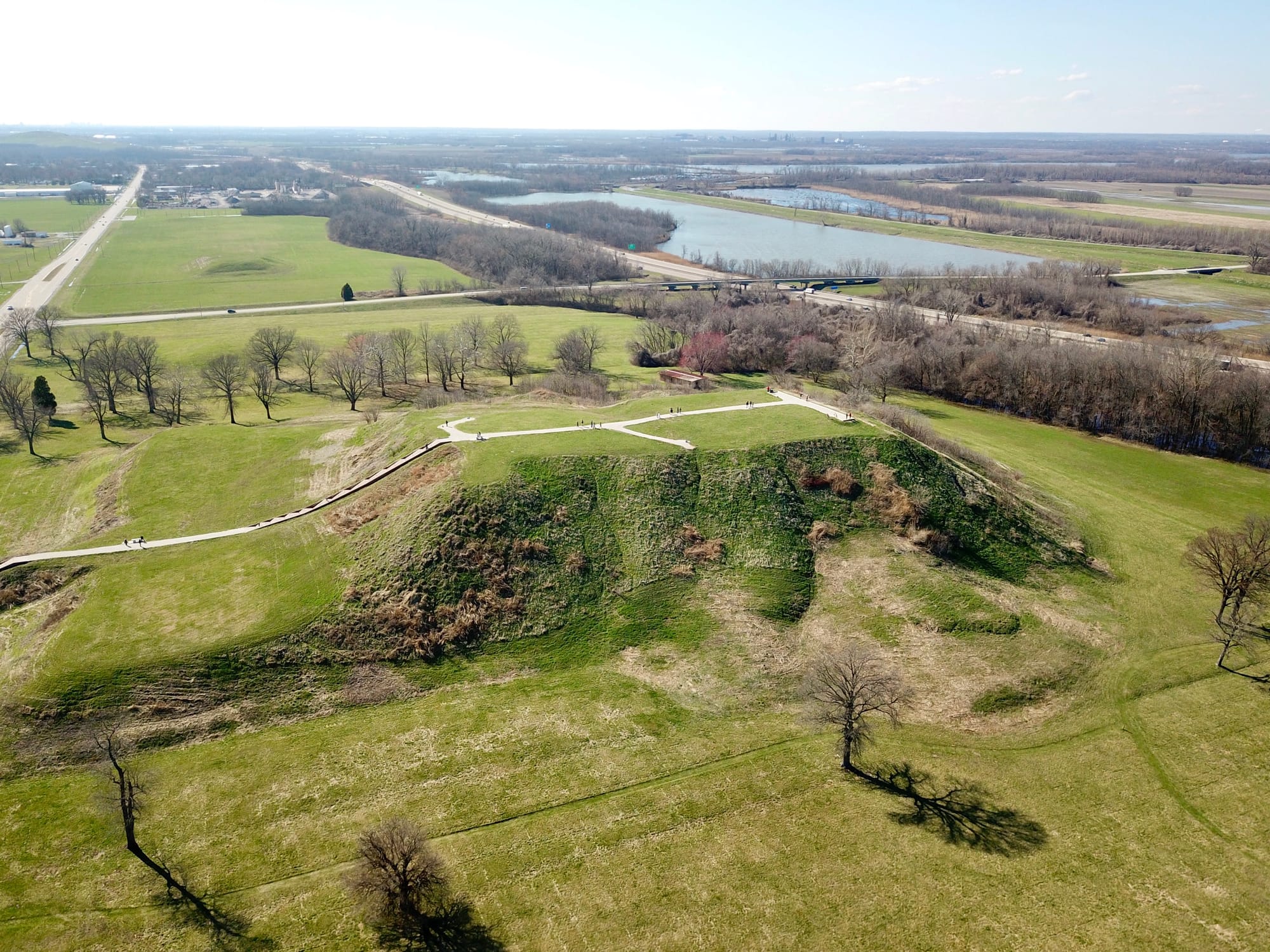
Two American narratives came together for my family at a place called Nanih Waiya, a Choctaw Indian mound in Central Mississippi. My grandfather, who had a modest education, had landed a job teaching the children of the Mississippi Band of the Choctaw. They were descendants of the tribe who had defied the ordered Westward relocation to Oklahoma, where the largest surviving part of the tribe continues to live. A sacred mound had kept them rooted to a spot in Mississippi where they held spiritual ceremonies related to the tribe’s origins. The Choctaw had long suffered, as did most indigenous peoples in North America, under migration of Europeans, but the Choctaw managed to retain Nanih Waiya under treaty with the U.S. government.
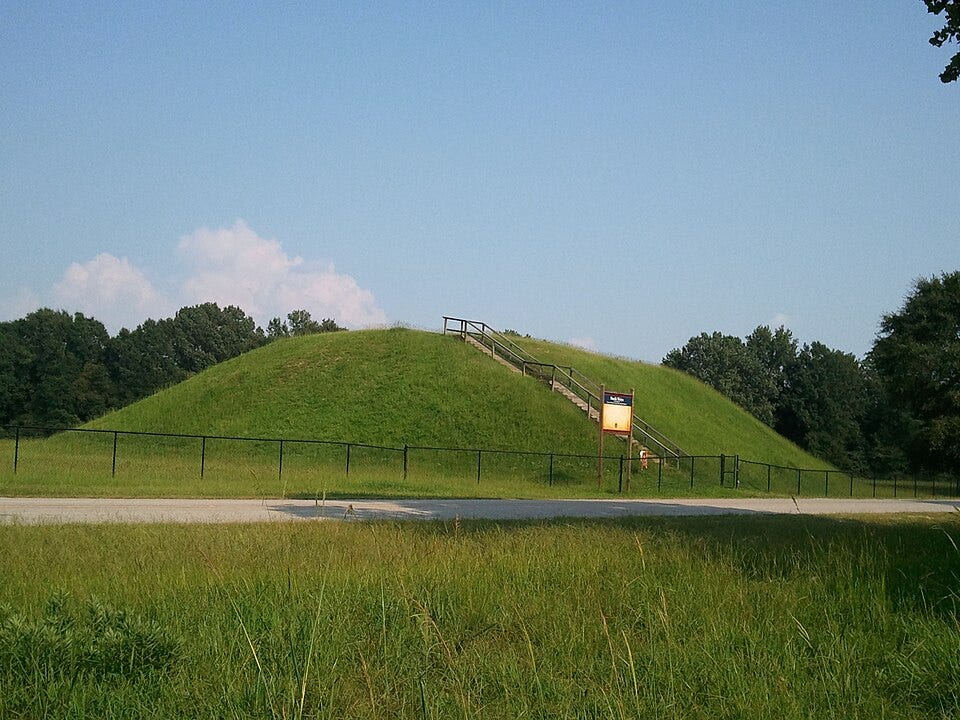
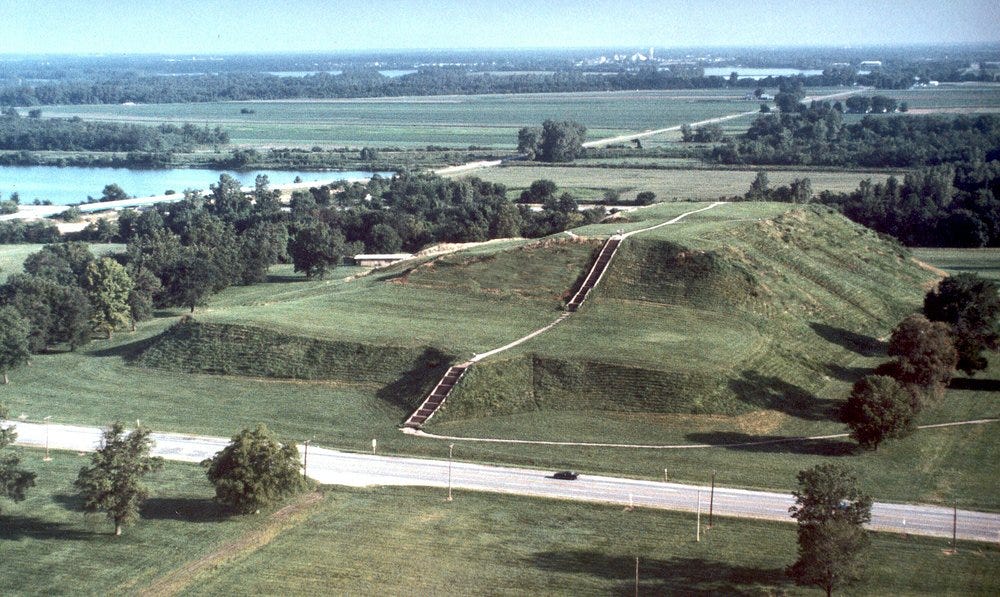
There are ancient Indian mounds scattered across the U.S. Mound building was part of many indigenous cultures and they were often used for burial. Possibly, the most elaborate complex is found in Illinois, the Cahokia Indian Mounds. Archaeologists and historians believe there was a society of around 20,000 people who lived in the location of the mounds just east of the Mississippi River in the northern part of the state. They maintained a sun calendar and built a large community before disappearing around 1400 A.D.; there is no evidence of why. No archaeological digging has been performed to search for human remains or artifacts at Nanih Waiya but research indicates the Choctaw did not use their mound for burial.
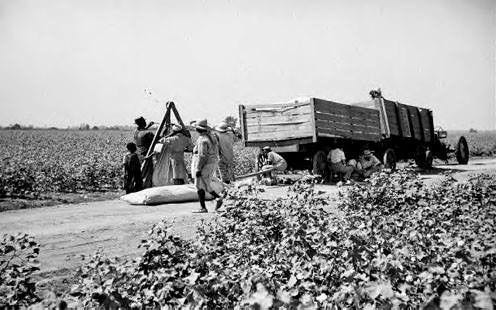
I never met my grandfather, Clinton, so I have no idea of his sensibilities toward the culture of native Americans. My guess, though, is that he was certainly grateful to be offered a job teaching as the Great Depression was taking stranglehold of the country’s economy. The position came with a modest home and a tract of acreage, perfect for farming corn and cotton for extra cash to feed his wife and seven children. My father, James, only in his teens during the Depression, began his work life hoeing those cotton and corn rows, taking up the farm tools of the common American struggle. There seemed, for him, his siblings and parents, and the nearby Choctaw people, an endless effort to have food and lasting shelter. There was little else to think about; an education is less important than an empty stomach.
A certain amount of good fortune is required to sustain a faith in the American Dream, and its true believers tend to be tested more than the Biblical character of Job. My father spent most of his days wondering when his luck might change. The summer after Daddy had left high school, a tornado spun up just west of the Nanih Waiya mound and followed the course of the Pearl River before turning toward their modest farm. The storm came in the night, the air still and humid, while all seven children slept deeply on straw tick mattresses.
They were not even awakened when the funnel tore through the pines and stripped them of needles, ran down a stand of magnolia trees to leave them with bare and snapped branches, crossed most of the cotton crop and pulled away the fat bolls that were nearly ready for harvest. The funnel came close enough for winds to destroy the wood-frame house and lift some of its sleeping occupants into the night sky. Elizabeth and Hope, two of Father’s sisters, were found still lying on their mattress almost a quarter mile from their bedroom. Two of his brothers, Tom and Jerry, were dazed and walking in the inky river mud, unaware of precisely what had just happened.
When the horizon brightened a few hours later the family began to more clearly see the devastation. Not even a two-by-four was left standing on the house and little remained beyond the concrete piers that had anchored the structure. Belongings were scattered across the remains of the cotton fields, and, down the dirt track toward the reservation, my grandfather saw that the schoolhouse where he had been teaching was no longer in existence. Not much of their lives was left to reassemble, and the Choctaw, more directly in the storm’s path, had likely suffered more destruction.
My father initially recounted this story for me while sitting on a front porch swing, moving slowly back and forth, chewing his lip, and looking off into the woods outside of Sturgis, Mississippi. Fireflies rose up through the long grass, constantly distracting him and his memory. Daddy always fancied that he saw things no one else was able to envision, and I think that the day of the tornado was as clear to him in that moment as it was the night the storm rolled up to their front steps. The details were still haunting.
“I come to not far from the house,” he said, softly. “But I didn’t know where I was then ‘cause it was too dark. They wasn’t no lights in them days, anyway, not out yonder. I heard Lizzie and Hope crying out in the dark, somewhere, but it seemed far off. I didn’t know what to do. Poppa started hollerin’ after all of us then, too, and I went toward his voice. I didn’t think we’d all be alive.”
They were all living, but their manageable poverty was about to become profoundly more complex. The old buckboard wagon with hard rubber car tires had been untouched, and four plow mules were wandering lost along the creek when Grandfather Clint began to assess his family’s prospects. Everyone was told to walk the property and surrounding woods and pick up what was worth salvaging and bring it back to the wagon. The boys carried armfuls of wood plank that had been torn from the walls; they placed it in neat stacks. In a few hours, the remainders of a cotton farm were spread into organized piles near the wagon and grandfather had begun to fashion a simple lean-to shelter out of broken wall boards. No one outside the family rushed to their aid. Word of harm was slow to move through the backwoods.
Clint knew there would be no more school for the Choctaw and no need for a teacher. Desperation began to take shape in his mind and he went into town the next morning to ask about work in the darkest hours of the Great Depression. A stern, and visibly emotionless man, my grandfather had learned to set his jaw and blue eyes against his endless hard circumstances, as if he might scare them into submission. They did not, however, seem to relent. At the general store, he offered the labor of three healthy sons in their late teens and his own broad back and coarsened hands in exchange for food, a place to live temporarily, or a respectable wage. There were no takers because everyone else was almost as desperate for employment.
One of the men lingering on a concrete loading dock did offer a slight hope. His uncle, he claimed, who worked land in Northeastern Arkansas, needed someone to sharecrop and run his cotton farm. Although the man only had a general delivery address for the town of Marked Tree, Clint borrowed a pen and piece of paper and wrote a brief note indicating his family was willing to travel immediately to the location and make preparations to manage and harvest the crop. Three of his five sons, he said, had reached an age where they could work as long and hard as any grown man. The letter was sent that same afternoon after he had walked to the post office for a stamp and envelope.
In just over a week, there was a job offer in return mail. The family had already rounded up scattered chickens to eat and early ears of corn that had not been stripped from stalks by the tornado, and vegetables still in the ground, ready for pulling. Salvaged clothing and farm and household utensils were loaded onto the wagon for a trip that was their only real hope. My grandfather took a last walk across the reservation to say good-bye to the students he encountered, and make a more complete assessment of their losses. Most of the crude homes had been destroyed and even the concrete piers appeared to have been tilted by the torquing wind. He saw the Choctaw huddled under trees, out of the sun, improvising shelter, and, like him, undoubtedly, wondering about their coming days.
Rain had been falling to the west and the sky switched from black to purple and back throughout the day they had set for departure. Unfortunately, there was no route that did not include crossing the Pearl River. Clint and his boys had fished most stretches of the water course near the reservation and were familiar with shallow spots that were likely safe to transit, even with the heavy buck board. A late start and an early darkness, though, brought by the stormy skies, made it difficult to read the river’s flow. Approaching the Pearl along a horse path, the mules were skittish and resisted moving forward into the living blackness.
“We had never really heard the Pearl make a sound more than a little gurgle before,” Daddy said. “But out there in the dark under them loblolly pine trees all them ol’ cottonwoods, we sure couldn’t tell much about it. There was a whooshin’ kinda sound, though, not a roar or nothin’, but we knew it was different than we’d ever seen it. Poppa said we didn’t have no choice but to get across and on up to Arkansas and we couldn’t wait for the water to go down.”
The animals had to be whipped to step into the rushing water, and my grandmother, known throughout her long life only as “Birdie,” flung the leather and made it crack loudly over the mules’ backs. There was no way to know how high the river had risen even though Daddy recalled it edging up close to the top of the banks. The girls and the younger boys sat below the top rail of the wagon with Birdie up front, holding reins and hollering through the downpour at the animals. Clint had already gotten to the other side on an old mare they owned, and he had trailed a long rope that he had secured to the yolk in the front of the mules. When he reached the far bank on the back of the swimming horse, Clint looped the rope around the trunk of a big cypress tree. Daddy and his two oldest brothers had slipped lines around their waists and tied themselves off to the back of the buckboard.
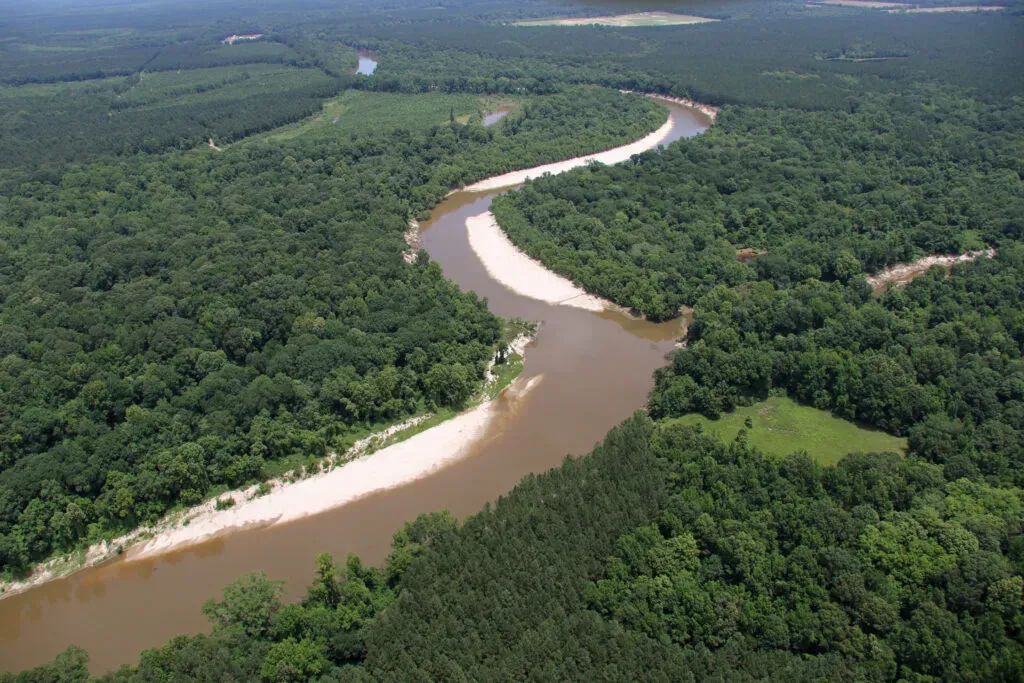
When the water took the wagon, Daddy was quickly frightened but hopeful because it easily floated about half-way across the river. The rushing current, though, pushed the buckboard downstream against Clint’s rope tied to the onshore tree trunk. He watched as his three oldest boys were swept to the downriver side of the buck board. Their weight added to the water pressure against the sideboards and caused a capsize. I am unable to imagine what my grandfather might have thought when he heard his wife and children screaming as the water swept them into the night. The wagon slammed into an embankment with the youngest children clinging to a rope that had trailed off the cargo bed. Clint slipped down the wet mud and was able to pull to safety his wife, two of his daughters, and his youngest sons, who had all managed to stay attached to the buckboard.
“Tom and Jerry and me was able to untie ourselves and grab onto some roots and climb up the bank,” Daddy told me. “We had everybody together pretty fast but Lizzie. She was gone down river.”
My father and grandfather ran faster than the rushing water, shouting Lizzie’s name and hoping for a response. The other boys pulled at the mules and helped them start to get up onto land and begin dragging the wagon out of the river. Most of the family’s possessions had been washed away but everyone was alive, including the animals, and they stood on the westward side of the river. If Lizzie was crying out for help, she could not be heard above the river or seen in the consuming darkness.
“Lizzie! Lizzie! Lizzie!”
My father was the first to hear the frightened pleading, response of his oldest sister.
“Poppa? Poppa? Is that you? Help me.”
Lizzie, who was in her late teens, was wedged between a log and a root tangle. The current was too swift for her to pull herself up onto the riverbank; she was held in place by the hydraulic pushing against her body. Daddy reached her before his father and pulled his sister up through the mud and briars; she then leaned on her Poppa and sobbed as they worked through the night woods to get back upriver to the wagon. Lizzie had been carried, they guessed, more than a mile downstream.
In the morning, the rain had stopped, and they began to move along an old wagon track that led them north before they turned slowly northwestward in the direction of Memphis, where grandfather had hopes of crossing the Mississippi River on a bridge, and without incident, into Arkansas. No matter how many times I asked him, my father was unable to adequately articulate what they felt like after that harrowing night on the Pearl River. Less than two weeks had passed since a tornado had tossed over their lives, and when they finally were given hope, the weather had again threatened their meager prospects with a flood. The only assessment he ever offered was, “We knew we was lucky to just be alive.”
There was not much to their lives, though, as they trundled through the pine forests and down the unpaved roads and dirt paths of rural Mississippi, Tennessee, and Arkansas. Everyone was filthy and ragged, mud caked their clothes and hair, and there were few acts of kindness from strangers, possibly because the family appeared so frightful. Clint had enough money to buy vegetables, jerky, sometimes bacon, and eggs from roadside farms, but hunger was inevitable on their month-long plod toward Marked Tree and Lepanto, Arkansas in the rich bottomlands of the Mississippi River. They must have felt displaced, and even embarrassed, unkempt travelers appearing as if from a different time, honked and jeered at along the paved sections of the road by drivers of passing motorcars.
I will always wonder what my father contemplated for his future during those days he spent covering hundreds of miles on foot toward Arkansas. Maybe he only dreamed of regular meals and walls and a roof to keep him from the rain and cold, but he was sixteen and must have begun thinking about the shape of his adulthood; where he might live, who he would love, how to make a living. There was nothing in front of him, though, to contemplate, other than more work; he faced long days in the cotton rows, chopping weeds and then picking bolls at harvest, tending a garden, feeding and slaughtering chickens for the family’s table, turning the earth by hand to put down more seed.
They were sharecroppers now, living in a shack, swaying walls, sagging floor, no running water or electricity, a mile down a dirt track in the middle of the cotton patch. Maybe working hard would get the family closer to prosperity, the American dream, but the only thing my father could see before him were long days swinging a hoe, chopping cotton, a chore that lasted, for him, a decade.
His only escape was a world war.