To Flaneur is to Fly
I learned the deceptive power of disingenuousness and how it could rot important ideas and institutions. Lost in our abundance, we've created divisions and argue over crumbs while the wealthy walked away with the cake and only looked over their shoulders for a laugh or two, and we have let them.

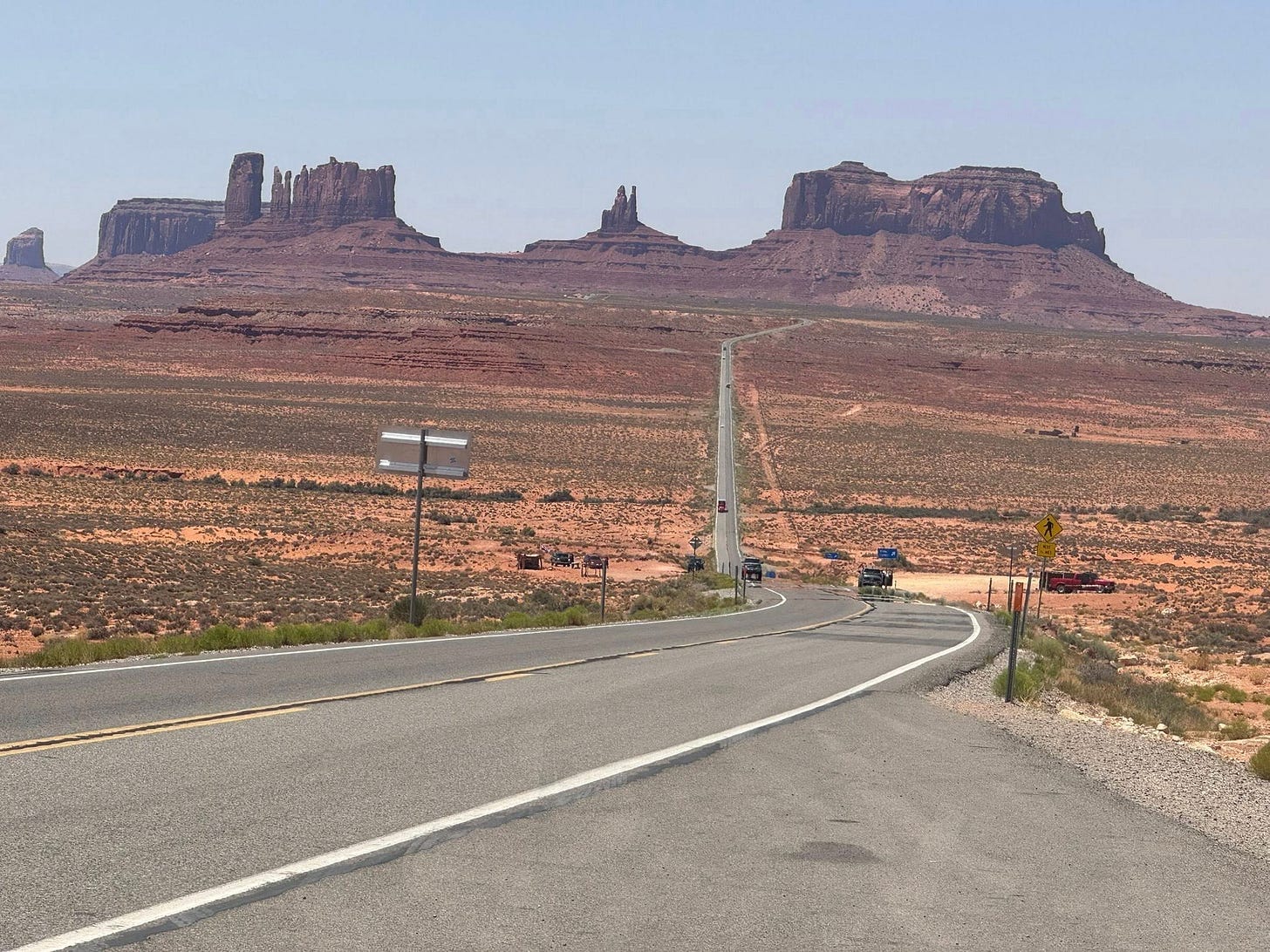
“The United States themselves are essentially the greatest poem.”
— Walt Whitman, Leaves of Grass
The word flâneur is most recently traced to the French language and bears a meaning considered almost pejorative in most of the energetic and ambitious Western culture. The definition is to wander or stroll, aimlessly, travel without purpose. Americans, however, can hardly breathe without wanting a reason for exhaling. Working as a journalist most of my adult days, there was purpose in my trips. Get there, acquire information, write, edit, produce video, get to a satellite, feed the news back home. The other type of travel, as a flâneur, had always been my preference. I liked to go places I had never been without any significant planning and discover what caught my attention and let that guide the course of my journey. There is no better way to travel, or to learn.
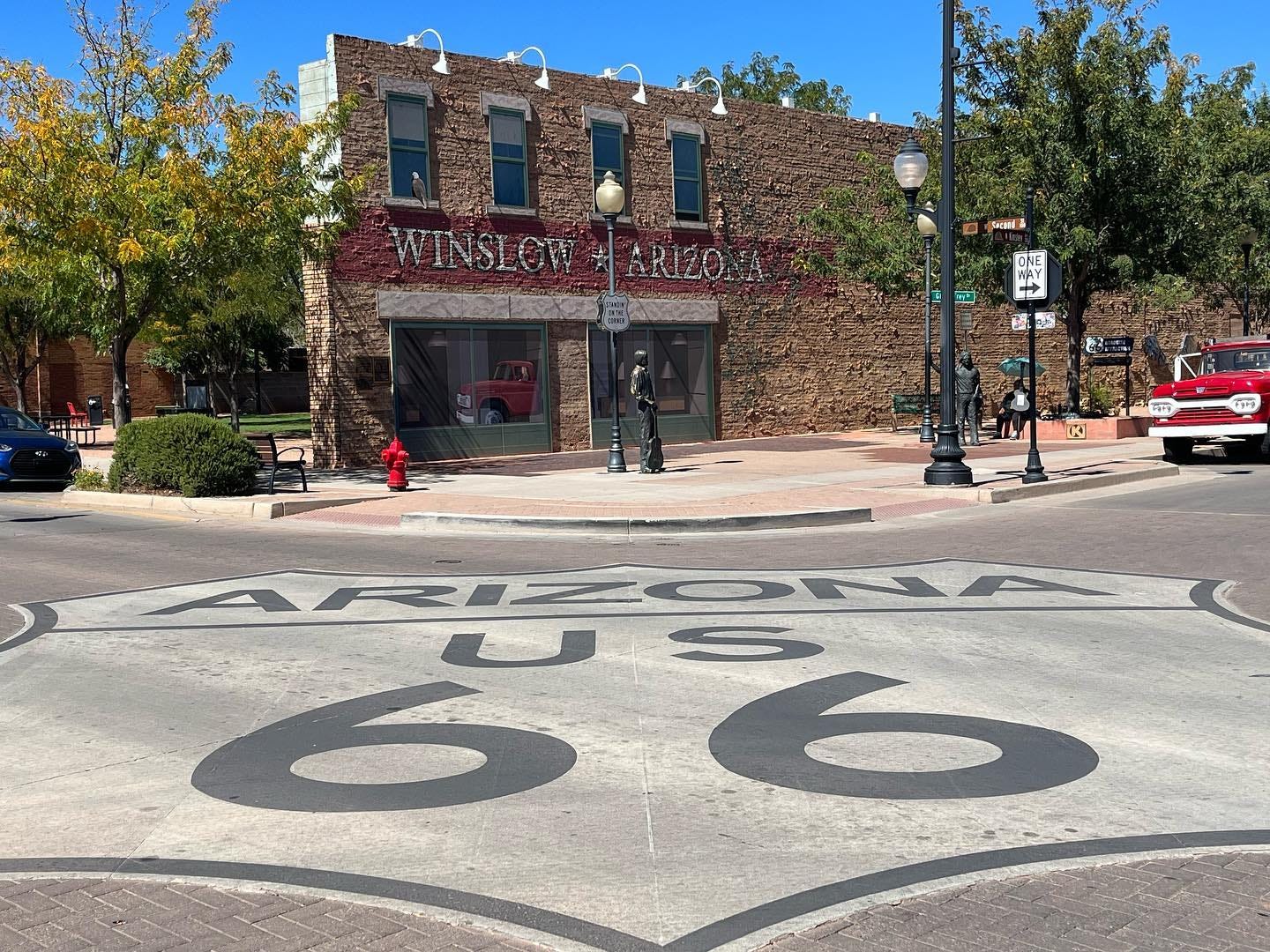
The summer I finished high school, I was seventeen, and had to go. I bought a cheap nylon backpack with some of my golf caddying money, hugged my crying mother good-bye, and made for the highway out of Michigan. I ought to have been afraid but any inhibition was overwhelmed by the excitement of new geographies and people and experiences. I understood the risk, and knew that every driver who picked up an ectomorphic hitchhiker had the possibility of dark motivations. My comforting delusion was that I could handle most any situation.
I was also not without motivation for my travel. My hope was to better understand the country where I lived, and to escape a troubled home life. Coming of age in the era of the Vietnam War meant I was about to be draft eligible. I needed to get a grasp on who and what we were in the U.S. as we invaded and destroyed another country under the false premise of “stopping communism over there before it gets here.” Even in high school, the anti-war pamphlets had circulated widely and I devoured the information. Did the people driving trucks and building homes and running restaurants and family businesses really know what was being done in their name? If so, why did they do nothing to stop it, and what in the hell could they do?
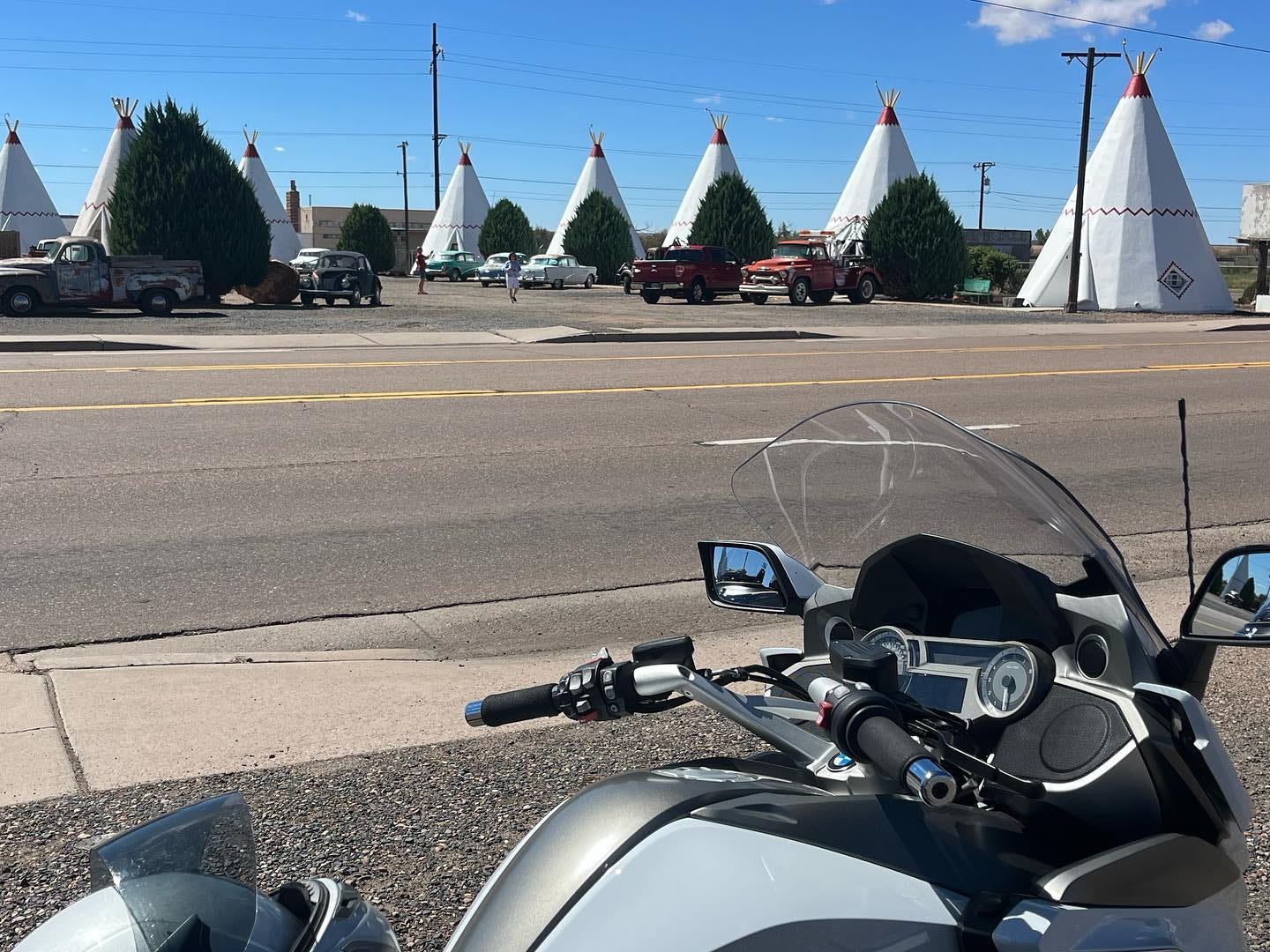
By the time I made California about ten days after my departure, I still had no clue. Maybe I was too young to understand politics, but I was astute enough to know that military service in a rich man’s war was not a destiny I would allow. There were other, more immediate questions, which I confronted every day of my wandering. How was I going to earn money for food? Shelter was not a concern, though. There was always a spot for a sleeping bag, if not my tent. One of the prettiest locations I slept was not too far behind a gas station in Flagstaff, Arizona with a nighttime view of moonlight on the ponderosa pines and the San Francisco Peaks north of town.
I never thought of my prostrate figure on the ground being approached or assaulted by a desperate or angry soul. Fear never entered the dreams of my youth. I had experienced it already as a child when my father’s mind faltered and his troubles found their fury in whirling fists and razor strops. I already knew what true fear was.
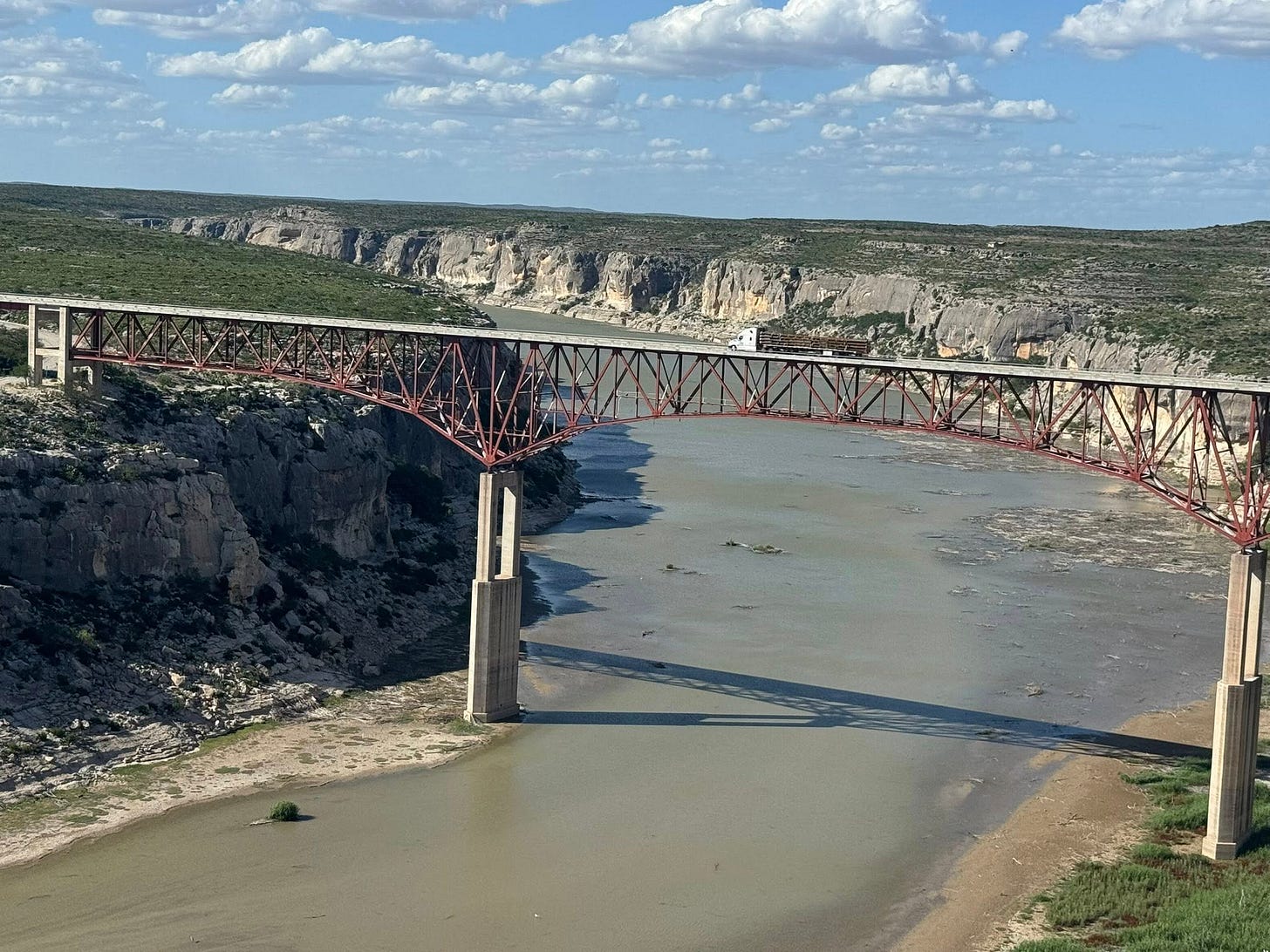
The dark and distant outdoors, alone and without real purpose, were comforting. My attitude baffled other people, and I was sometimes asked what in the hell I was doing, singularly bent against oncoming traffic, soliciting a lift. I remember, vividly, a California rancher in a Ford step side pick up, who took me out of the rain on the Pacific Coast Highway.
“Son, what in God’s name are you doing out here?”
A few day’s growth of beard had put white whiskers on his face and his nose curled down toward his upper lip. I noticed his eyes, though, were green, but set too close together for strangers to think him friendly.
“Just trying to get out of the rain and down to San Diego,” I said. “Never been there before.”
“Well, that ain’t what I meant,” he said. “You look at yourself ever?”
I thought the question strange, but have always remembered it because it was a kind of guiding principle I adopted, to look at myself, just not the manifest physical version.
“I don’t know what you mean, I guess,” I said. “I’m not a look-in-the-mirror kinda guy, if that’s what you’re talking about.”
“No, I’m not. I’m talkin’ about somethin’ else. You look like you ain’t but about fifteen and your skinny ass is standing alone out hitchin’ in this troubled ol’ world.”
I braced myself for a looming question about Jesus, but none arrived. In the two months I had been wandering, at least a half dozen times I’d been compelled to explain I did not believe in religion of any kind and especially found resurrection stories to be nonsensical and too fantastical for intelligent people to accept, much less use as a kind of moral template for their lives.
“I just wanted to go see things,” I said. “See some of the country. My family doesn’t have money to travel, and I’m a little tired of reading about places like California, so, here I am, I guess.”
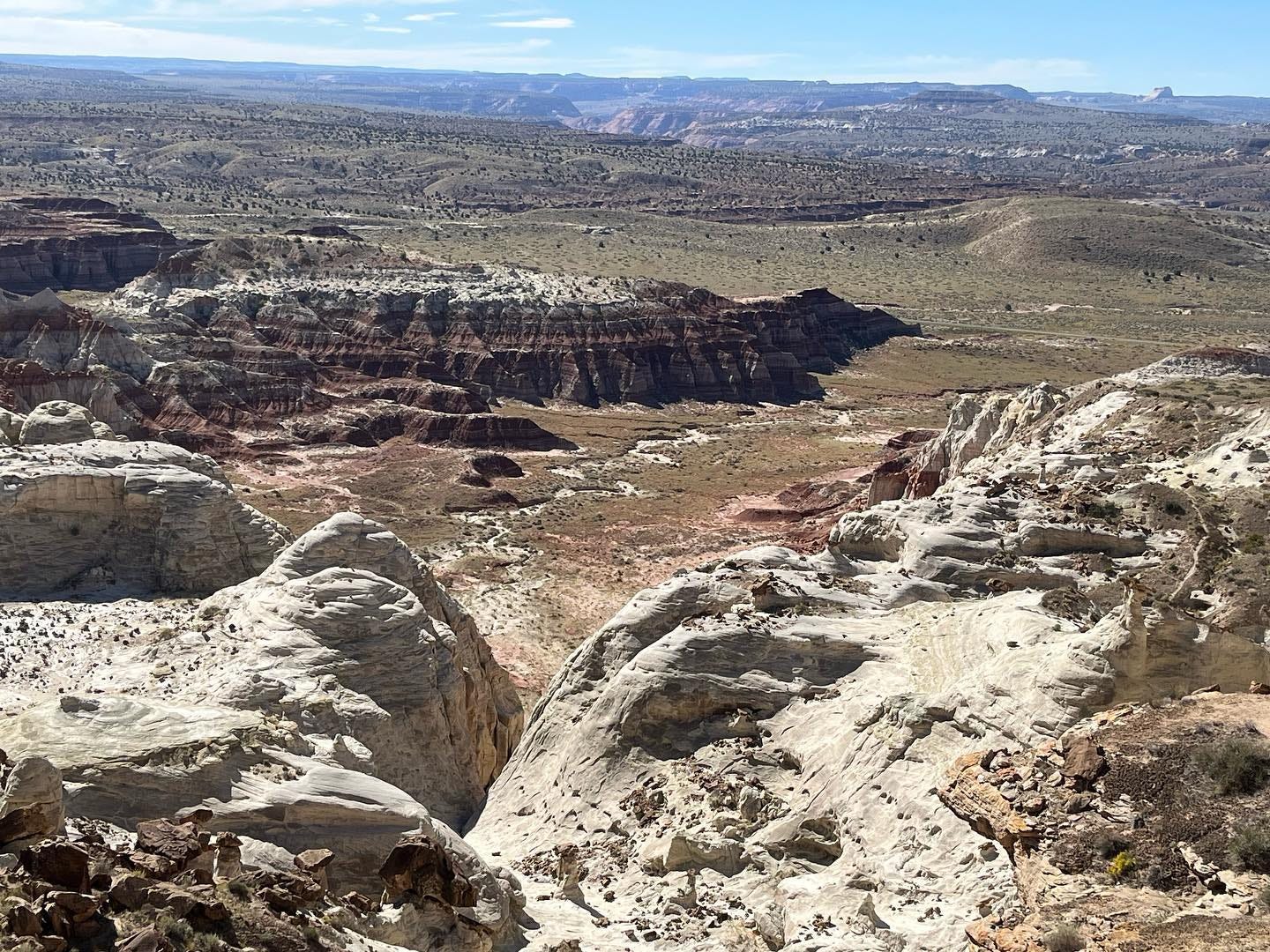
“Okay, okay, I understand.” He put both hands on the steering wheel and during breaks in the rain storm I turned to look out my passenger window and was able to see the Pacific rising up against the palisades of rocks, leaving white sheaths of mist to disappear with thunder. “But what if I had me a gun, or was some crazy sex pervert, they’re out here on these roads, son. Ya gotta be careful.”
“I am,” I said. “Most people are good, though, I think, and I’m pretty sure I could see that kind of trouble coming before it found me.”
“I hope you can, boy. And I don’t mean ta scare ya and take away your fun of travelin’ around but the news is filled every night with some damn person having killed an innocent victim of some kind.”
“I know. I’m careful.”
My compulsive wanderlust did not leave me alone, and never has. In subsequent summers, I hitched with pals. One, home from the jungles of Vietnam, followed me out to Rocky Mountain National Park and we hiked the trails along Fall River up towards the Divide and then caught rides down to the Grand Canyon for a rim-to-rim hike that still plays in my head like an old Kolb Brothers’ film from the museum on a park precipice. The first motorcycle adventure was on a two-cylinder Honda 450 and in my bulletproof foolishness I would drop behind 18-wheeler tractor-trailers and catch their slipstream, barely touching the throttle and riding almost without the clutch engaged, captured by a hitch of the big rig’s wind.
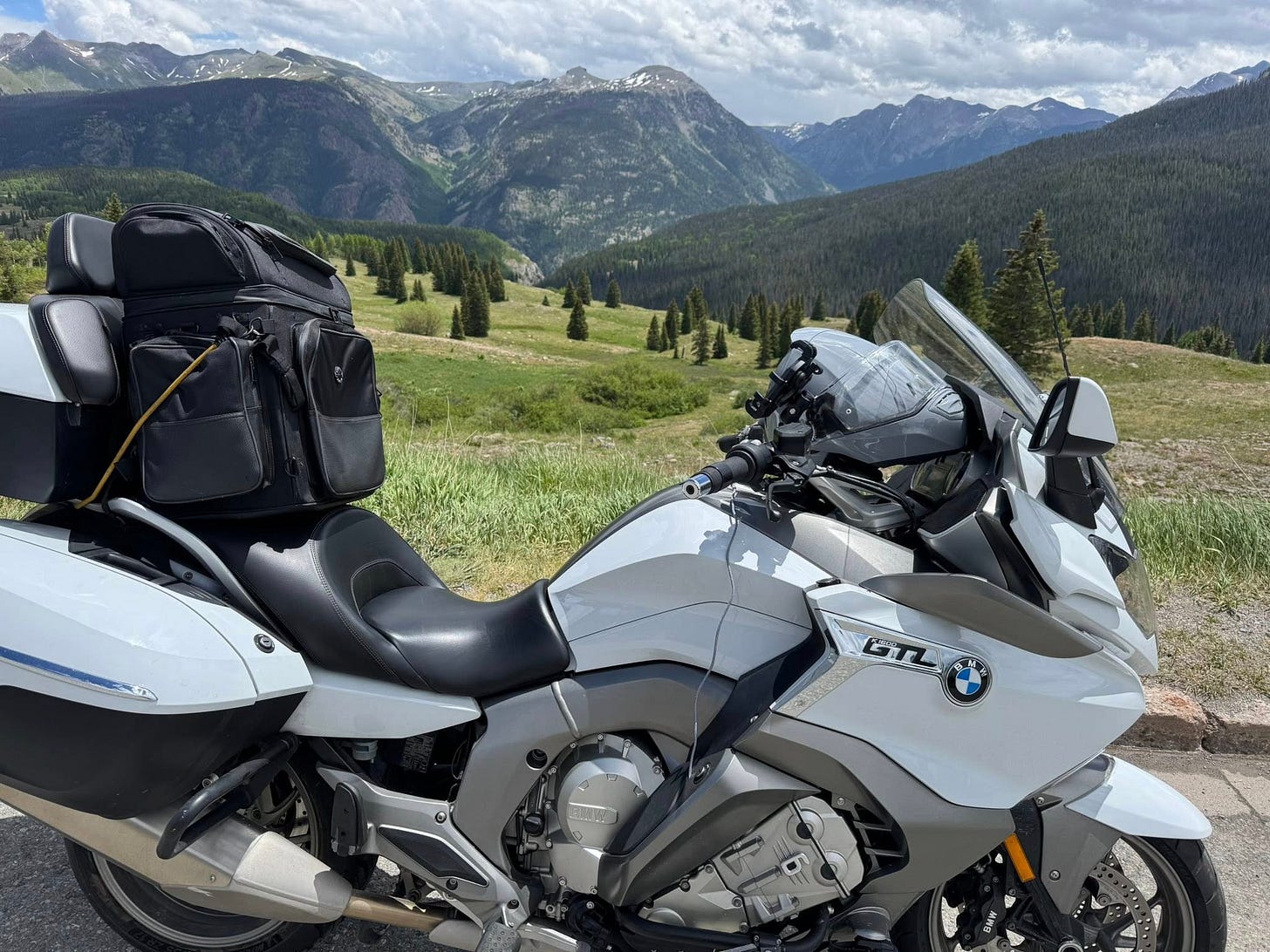
The motorcycles got bigger and faster and there was no goal in my journeys beyond getting to know my country and living not ordinary. I suppose that meant I was something less of a flâneur since I had a vague goal but I always thought the French were referring to the privileged, the monied strollers of boulevards with endless cafes and bistros, who had time to do nothing, and merely gaze at everything without worry or fear. Mark Twain’s insistence that travel was fatal to prejudice is mostly true, but encounter enough different types on the road and a few preconceptions will be hard to shed. I have heard the “N” word slung around in common parlance and was unsurprised when my long-haired contemporaries were referred to as low-lifes who didn’t deserve to live in a country that gave them freedom, as if there were a set of rules in a book that explained how freedom must be used.
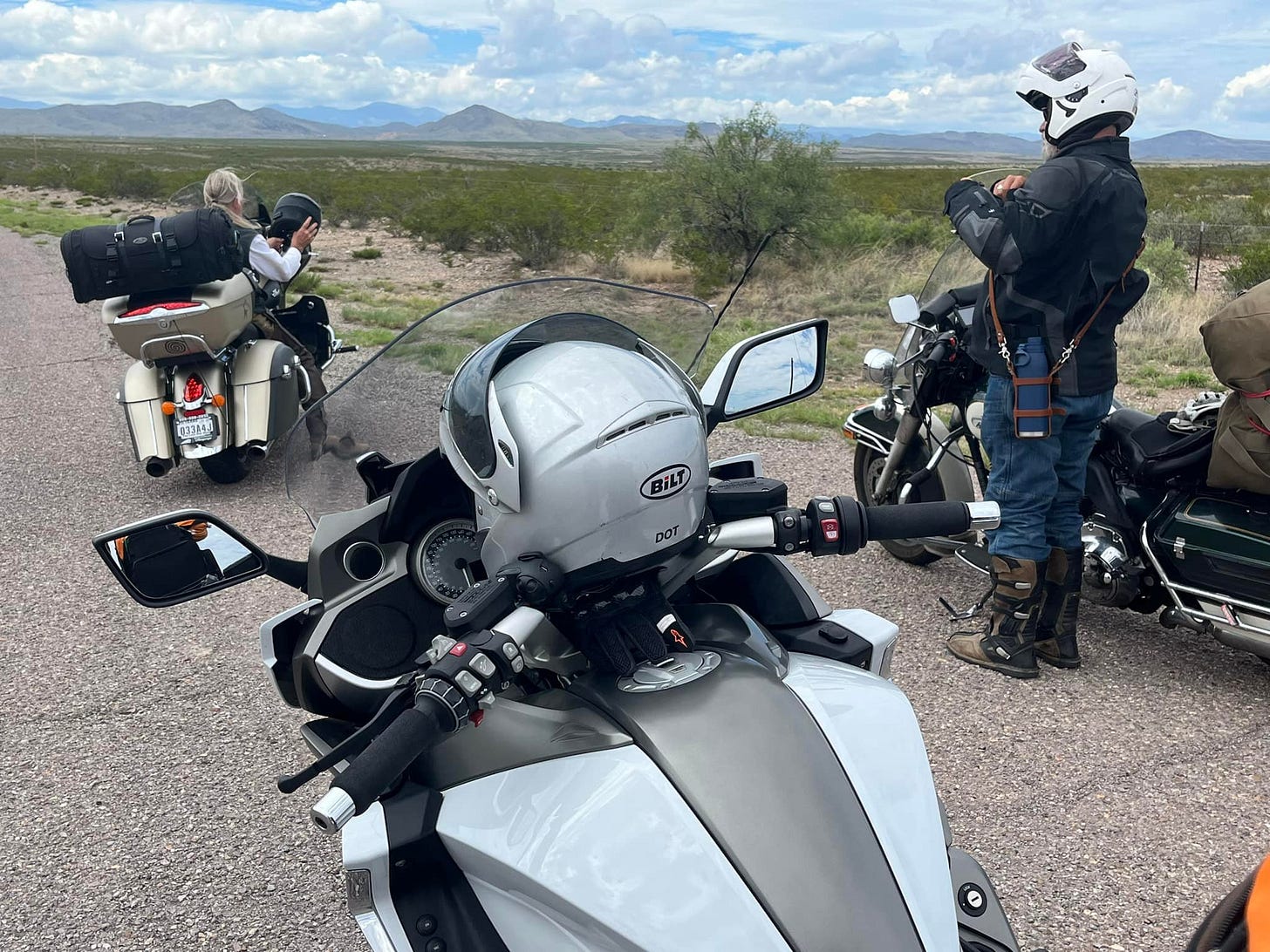
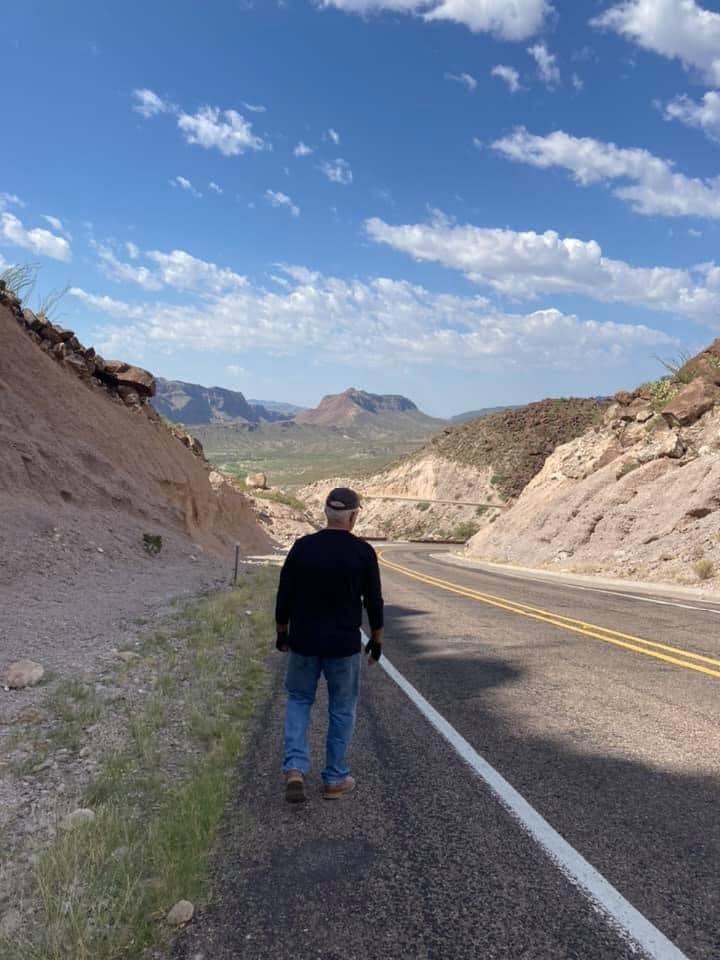
There was a meme making the rounds on the web recently that showed a smiling man on a motorcycle racing across some long open road, grinning at the horizon like it was a living thing spreading out a welcome mat for his arrival. The headline above the image read, “If you want to hate America, watch the news. If you want to love America, ride a motorcycle across it.” As usual, the internet is facile in its insights. Neither outcome is the exact consequence of motorcycle travel. You arrive at a love of the landscape and understand with a new intimacy how easy it is to fall for the beauty of even a Kansas wheat field swaying in a summer wind or switchbacks curling a route up into the Chisos Mountains along the Rio Grande. The vistas and the roads are endless. Ride up the Great Basin without coming away with an increased wonder of existence and you must conclude you are soulless.
My travels as a journalist were sometimes even more educational, and not in a positive manner. Probably, this was the result of spending much of my reporting time on state and presidential politics. I learned the deceptive power of disingenuousness and cynicism and how it could set to rot important ideas and institutions. Somehow, lost in our abundance, we managed to create divisions and argue over crumbs while the wealthy walked away with the cake and only looked over their shoulders for a laugh or two, and we have let them. There is no other explanation for our current predicament, and though we know precisely what is wrong, we act as though we have no facility to affect a solution. The majority of our countrymen and women are good and decent people, working hard to care for their families and their communities, and what they have as a nation today is not what they want.
All American stories begin and end with the road. I know there is a different country out there, just around the bend, or up ahead where the sky and the earth meet and make a great seam. I will keep riding my motorcycle, looking for it, and hoping it is not burning to the ground behind me.