Two Daiquiris at the Floridita and a Lesson America Never Learned
Latin American nations that have, painfully and slowly, moved past the legacy of all the U.S.-backed coups will have to face a clarity they have been avoiding: nothing has changed, the Monroe Doctrine has simply been rearmed by a man who has said, “I can do anything I want.”

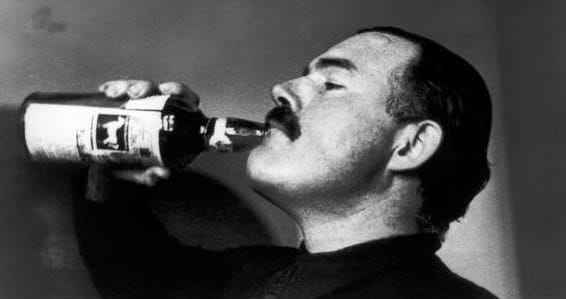
“There are many who do not know they are fascists but will find it out when the time comes.” - Ernest Hemingway, For Whom the Bell Tolls

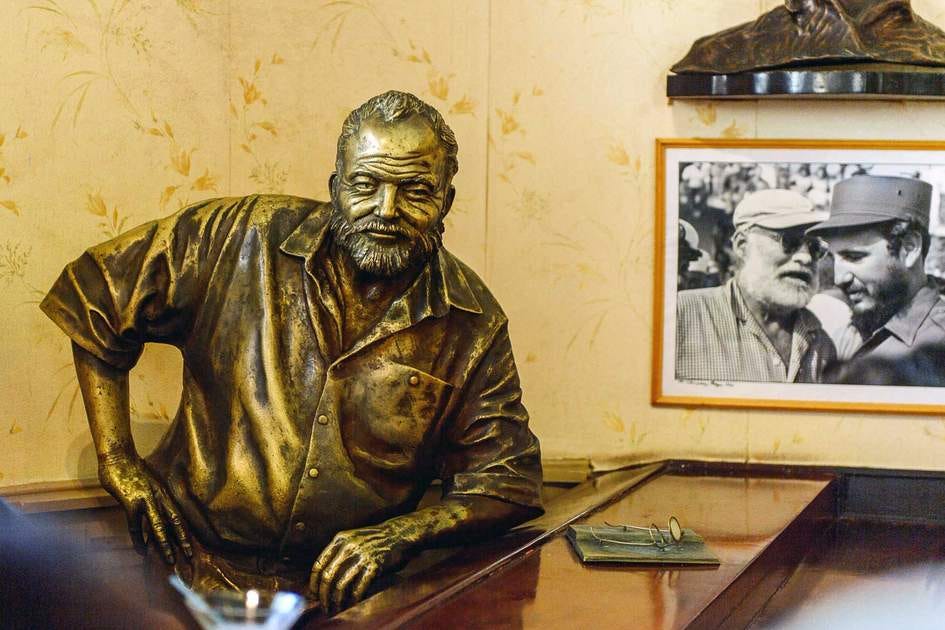
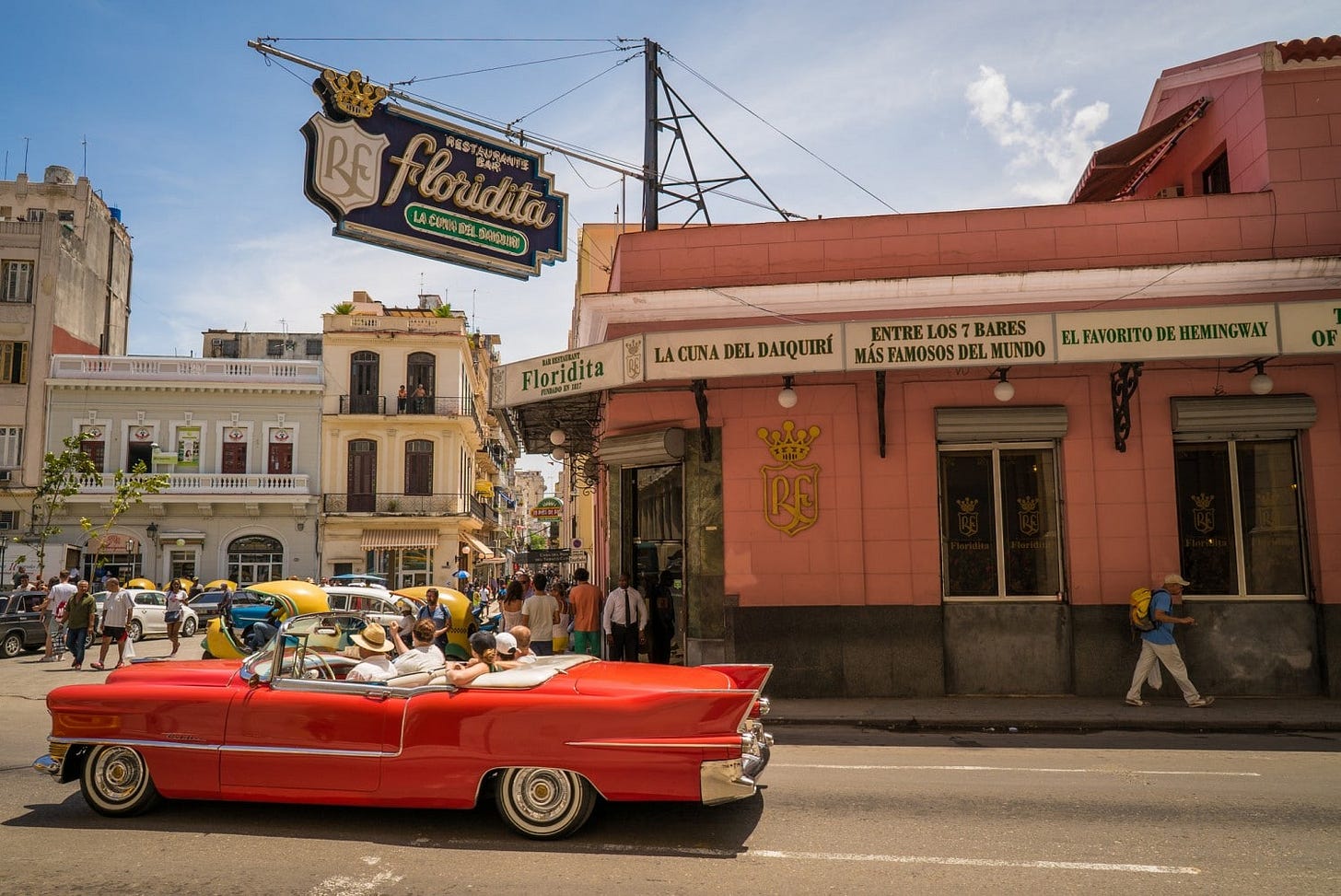
I had just walked out the door of the El Floridita, a simple but remarkable act I never imagined might be possible. The most famous bar in Cuba, hell, maybe the world, was where Ernest Hemingway spent his afternoons drinking daiquiris at the end of his writing day. Lore, legend, or facts, indicate that he had once drank 14, he claimed 17, daiquiris while sitting at the end of the Floridita’s bar, and they were all doubles. I’d had only two on that spring day in 1983, and was woozy enough to leave and start walking toward the Havana seawall to take the air. Visiting the bar felt like a right of passage for a novelist manqué, and I was not disappointed by the experience. The walls were adorned with photos and magazine articles about the man and his drink and his words. Twenty years after my visit, a life-sized bronze statue would be erected at the spot along the bar where he had accomplished the determined work of destroying his liver after creating eternal stories.
There was more history than news for a young correspondent to absorb on that trip. I was old enough to have been terribly frightened by the Cuban Missile Crisis in the early sixties and sufficiently educated to wonder how my country’s leadership had never reconciled with Fidel Castro and developed a mutually beneficial economic and diplomatic arrangement. I was in Cuba with a delegation of Latino leaders who were hoping to open doors to travel and business, believing the new President, Ronald Reagan, might be warm to the idea. Cuba’s economy and people would have prospered mightily with the sales of rum, cigars, and sugar into the American market, but it never happened. I sat on the seawall, staring out across the Bay of Havana to the Straits of Florida, trying to understand the absurdity of geopolitics. Forty years later, I suppose I remain confused, and even more worried over what is about to happen to the island and its people.
It didn’t have to be this way, but Americans are often guilty of taking what they want, without asking, and there are always consequences. The eighty-two men who crammed themselves aboard a leaky, badly overloaded cabin cruiser in November of 1956, were reacting to a U.S. sanctioned oppression of the Cuban people. As the vessel named the Granma pushed off from the Mexican coast into the Gulf of Mexico, a revolution was a-borning. Designed to carry no more than twenty-five passengers, she rode so low in the water that ocean spray soaked the men continuously. Two of them were seasick the entire journey. One was a young Argentine physician named Ernesto “Che” Guevara, already ill from asthma, and burning with a conviction that had found its proper country. The other was a bearded, barrel-voiced Cuban lawyer named Fidel Castro, who had tried once before to take back his country from the dictator, failed spectacularly, went to prison for it, and turned his incarceration into nothing less than a graduate school of revolution.
The man they were determined to overthrow when they landed on the island was Fulgencio Batista, an authoritarian who had seized power twice. The first time was in 1933 as a populist sergeant who rode genuine reform sentiment, and then again when he engineered a 1952 coup, only eleven days before an election he was certain to lose. The second Batista governed Cuba as a commercial transaction, and his main customer was the U.S. To keep his government operating as a business, Batista’s police tortured and disappeared political opponents with the casual efficiency of a well-funded bureaucracy. By conservative estimates, his regime killed somewhere between three and twenty thousand Cubans during its seven-year, second run. Bodies were left in the streets as messages.
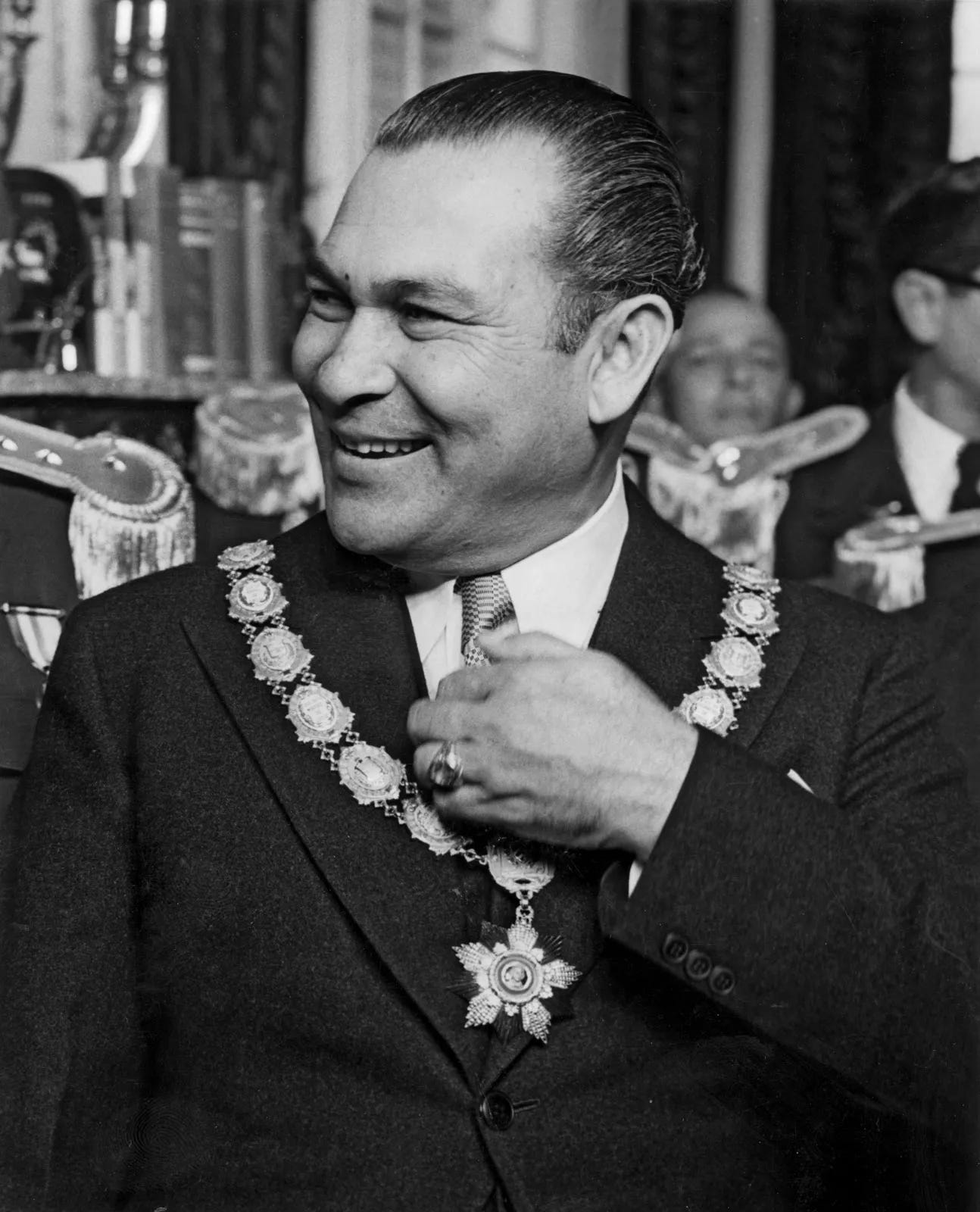
Here is where you will not be surprised to learn that behind Batista stood a silent architecture of American interest that made his brutality possible and profitable. Washington recognized his government within seventeen days of his coup. The U.S. military provided weapons, training, and equipment. Organized crime got busy, too, and operated with the full blessing of American companies. The mob bosses quickly transformed the island into the Western Hemisphere’s most spectacular pleasure destination for people who preferred their pleasures unregulated.
Meyer Lansky, the mob’s financial genius, effectively ran the Havana casino industry, kicking generous percentages back to Batista directly. The hotel where I was staying on my trip, the Riviera, along with the Capri and Nacional, were palaces of vice and monuments to a partnership between American organized crime and Caribbean dictatorship. Havana in the 1950s offered wealthy American tourists something that Las Vegas was only beginning to approximate. There was gambling with no legal oversight, prostitution openly available at every price point, and drugs flowing freely through the back doors of nightclubs. The city itself was a giant transaction. The Cubans who cleaned the hotel rooms and poured the drinks and provided the bodies for the sex trade, however, made wages that, by even the most charitable measure, kept them in permanent, hereditary poverty.
Meanwhile, the U.S. sugar industry controlled roughly forty percent of Cuba’s agricultural land. American mining companies extracted nickel, chromite, and copper. Telephone and electric utilities were also American-owned. Cuba was, in the most precise economic definition, an American colony. The country had been granted only nominal independence while its productive capacity was shipped north, which is, quite simply, a truth that Castro leveraged for his rise to power.
That fact is at the core of an uncomfortable historical truth that American policymakers have never fully absorbed. Fidel Castro was not inevitable. Marxist revolution in Cuba was not inevitable. What was inevitable, absent reform, was that someone would eventually organize the rage of the Cuban peasantry and working class into a force powerful enough to overwhelm a military that was better equipped to torture prisoners than fight guerrillas. And, of course, that is precisely what happened.
Castro’s political base was not the Communist Party of Cuba, which was actually suspicious of him for most of the revolutionary period. His support came from students, from rural farmers who had watched American sugar companies evict their families from land their grandparents had worked, from small business owners strangled by the corruption tax that Batista’s apparatus collected at every level, from professionals who had received educations and returned to find their country was not available to them, only to connected families and foreign interests.
Castro was supported, in the early years, by a substantial portion of Cuba’s middle class. The Catholic hierarchy blessed the revolution and the New York Times ran favorable profiles of the young bearded idealist in the Sierra Maestra. The radicalization of the Cuban revolution was not, in fact, predetermined. In significant measure, what happened to the island’s government was a response to American behavior after January 1, 1959, which was the day Batista fled to the Dominican Republic with several hundred million dollars and whatever dignity he imagined he retained.
Every American president from Eisenhower forward has maintained, with varying degrees of hostility, that the proper posture toward Cuba is isolation, pressure, and punishment. Eisenhower authorized the CIA program that became the Bay of Pigs. Kennedy inherited it, tried to distance himself from it, then approved it anyway and watched it collapse into disaster in April of 1961. Fourteen hundred Cuban exiles, CIA-trained and American-equipped, were defeated within seventy-two hours by militia forces protecting a revolution that most Cubans, whatever their private reservations about communism, preferred rather than a return of Batista’s America.
The Kennedy administration then attempted to assassinate Castro no fewer than eight times, according to the most conservative CIA accounting. There were, more accurately, dozens of plots to kill the Cuban leader when you count the more baroque schemes involving exploding cigars and poisoned wetsuits. The practical effect of those failed conspiracies was to give Castro the moral standing of a man his enemies could not kill, and to confirm for the Cuban people that their northern neighbor’s vision of regime change meant the return of everything they had fought and died to end.
The Cuban Missile Crisis of October 1962 hardened into permanent mutual mythology what had already been a poisoned relationship. Americans remember it as Kennedy’s triumph over Soviet aggression. Cubans remember it as the moment the Soviet Union agreed, without consulting Havana, to remove its missiles in exchange for an American pledge not to invade. They did not know at the time about a secret agreement with Kennedy to remove U.S. missiles from Turkey. Cuba was, once again, a bargaining chip in a negotiation between great powers that did not include Cubans.
Every president since has maintained the embargo with reasoning that evolved as the underlying rationale collapsed. The issue was about communism until communism fell everywhere else and trade resumed. It was about human rights until Saudi Arabia and Vietnam and China became major trading partners. It was, also, honestly, about Florida electoral politics and the concentrated power of the Cuban exile community in Miami, whose ferocity on this single issue made engagement politically suicidal for any Democrat and unnecessary for any Republican.
Which brings our foreign policy merry-go-round back to the present, and to the disturbing signals emanating from the current administration about Cuba’s future. The rhetoric of taking control of Cuba, whether by economic strangulation, regime change, or the blunter instrument of military force, follows a pattern that should by now be recognizable to anyone paying attention to how this administration approaches geography it considers historically available to American authority.
What is to be gained by an American military intervention in Cuba? The honest answer, stripped of the democracy promotion language that will inevitably be deployed, is not much. Considerably more could be achieved by a different policy, and at a cost that the advocates of intervention have not attempted to calculate honestly. Cuba has nickel and cobalt. It has a strategic position ninety miles off the Florida coast. It has a medical system whose community health infrastructure, despite the privations of sixty years of embargo, has produced outcomes that shame several American states.
What an invasion would produce is something else entirely. Cuba has a military of approximately fifty thousand active personnel backed by a reserve and paramilitary structure that could swell to half a million. Unlike Iraq, it is an island with no desert to maneuver across and is a country of mountains, jungle, swamp, and approximately eleven million people with a seventy-year-old living memory of what American power looked like when it ran their country. They are not interested in a return engagement. The guerrilla tradition that put Castro in power did not die with him. It was institutionalized. Any American ground campaign in Cuba would be Fallujah, stretched across eight hundred miles, fought in terrain purpose-built for insurgency.
The United States has now demonstrated, in Iraq, in Afghanistan, in Libya, and most recently in Iran, a persistent inability to accurately forecast the consequences of military action in countries with deep national identities and long memories of foreign interference. Each intervention was sold to the American public with the promise of swift resolution and grateful populations. Each produced instead a decade-long commitment, a destabilized region, and a generation of enemies assembled from the rubble of people who had not previously been enemies. Every bomb falling on Iran today is likely giving birth to as many radicals and terrorists as it is killing. They will keep coming for generations.
An attack on Cuba, following an attack on Iran, would announce to every government in the Western Hemisphere and beyond that no country within the imagined American sphere is safe from the exercise of American military preference. The Latin American nations that have, painfully and slowly, moved past the legacy of Operation Condor and U.S.-backed coups would face a clarity they have been diplomatically avoiding. They would be forced to acknowledge that nothing has changed, that the Monroe Doctrine has simply been rearmed by a man who has said, “I can do anything I want.”
Cuba, after everything, the embargo that collapsed its economy, the CIA operations that destabilized it, the decades of isolation, remains a sovereign nation of people who did not choose their government’s relationship with the United States, who have paid the price for it in medicine and food and poverty, and who deserve to negotiate their own future. The logic of invasion does not produce the outcome its proponents imagine. Havana will burn again and another generation of Cubans will carry their grievance in their bones across whatever water separates them from the country that, once again, decided their fate without consulting them.
History does not demand that we repeat it. But it does, with remarkable consistency, punish those who refuse to read it.