What's the Big Damn Mystery?
"...a question for everyone acting surprised that the FAA shut down all of US airpspace on Nov 13. What in the hell did you exactly expect?"

I keep wondering if we Americans are naïve or just flat stupid. I’m sure it’s a dynamic mix of both characteristics. But everyone acting surprised about the breakdown of our infrastructure and institutions clearly hasn’t been paying attention to what their president and congress have been laying out for our scrutiny. Things are falling apart because 77 million of us voted to give MAGA mobsters control of our government in 2024. The evidence of our ignorance is stupefying and would require citizens to be more dedicated than they want to find it, read it, and understand it. And there’s a lot of it, which I have assembled for you here. More trouble will follow. - JM

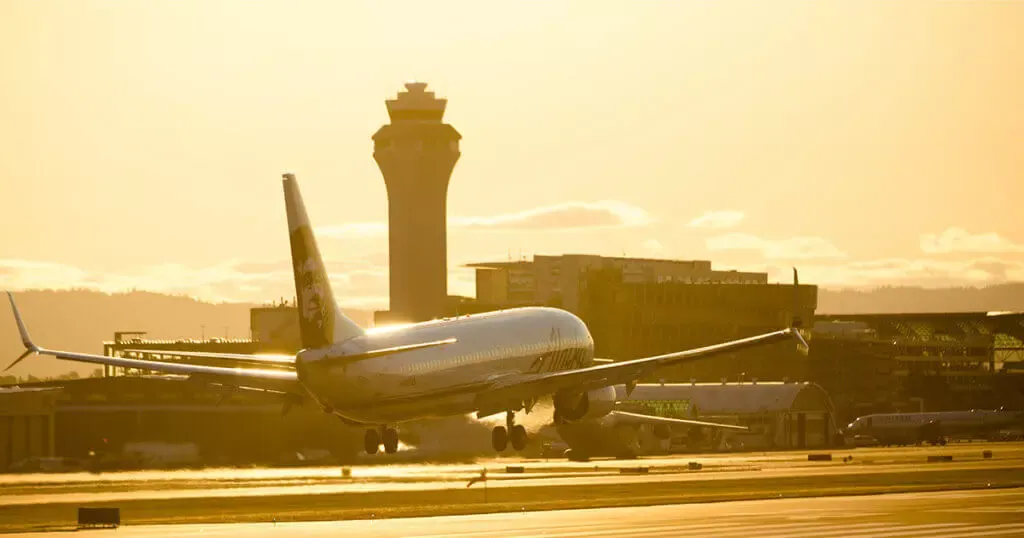
On Friday, November 13, at about 3:30 in the afternoon Eastern time, the Federal Aviation Administration stopped every departure in the United States. A new router at a remote FAA site, installed during a swap of old copper lines for fiber, began flooding the agency’s communications network. Most of the 22 centers that guide high-altitude traffic lost reliable contact with pilots. Commercial airliners in the sky without ground control. More than 9,000 flights were canceled that day, and the total climbed toward 20,000 before the backlog cleared. The FAA had grounded the whole country only twice before, which was on September 11, 2001, and during a pilot-notice outage in January 2023.
Reactions were predictable, too. Shock, shock, I say! Outrage. Finger-pointing. The president told reporters he takes “no responsibility.” (That’s not really a shocking development. He’s never taken responsibility for anything.) His Transportation Secretary blamed the last administration and asked Congress for $50 billion before Christmas. The Homeland Security Secretary, Markwayne Mullin, a once-and-future plumber, blamed Joe Biden, then boarded a government plane to watch LSU play Texas. His facile explanation was that if he didn’t fly it would send a message; he didn’t trust the system. Plus, he said he had promised to take his nieces to an LSU football game; they’d never been to Tiger Stadium.
Anyway, I’ve got a question for everyone acting surprised. What in the hell did you exactly expect?
You fire the people who know how the machine works. You pay the ones you can’t fire to just go ahead and leave, too. You freeze the hiring that would replace them. You pull a trillion dollars out of health care and hand most of the savings to people who already have more money than they can count or spend. You start a trade war with the biggest customer American farmers ever had. Then you stand at a podium and squint at the wreckage like a man who found a dent in his pickup and cannot imagine how it got there.
The mystery, if it is one, solves itself. All you have to do is read the record of your president and his MAGA mobsters.
Who Got Cut Loose at the FAA
Start with the people. In February 2025, less than three weeks after an Army Black Hawk and an American Airlines jet collided over the Potomac and killed 67 people, the administration began firing FAA employees by late-night email. Perfectly logical reaction to an apparent crisis, no? Sean Duffy went on X to calm everybody down. Fewer than 400 were let go, he wrote, all of them probationary, and “zero air traffic controllers and critical safety personnel.”
Controllers kept their jobs. The people who keep the controllers’ equipment alive, though, were another matter. The union for FAA technical staff said the fired workers included systems specialists, safety inspectors and maintenance mechanics. An air traffic controller told the Associated Press the cuts hit people hired to maintain radar, landing and navigational aids. When reporters asked whether those jobs counted as critical safety functions, the department said it would have to look into it. They seemingly need better eyesight or improved glasses. Twenty-one months later, a telecommunications fault grounded the country. How hard did they look?
Firings caught the public’s attention, a little. But real damage was done with exit packages. The administration offered buyouts it called deferred resignation, and by May 2025 more than 2,700 FAA employees had raised their hands. Competent professionals could not be expected to hang around under Trump. An internal FAA presentation that month, obtained by The Wall Street Journal, said employees were “departing the agency in mass quantities.” By this fall, the head of the technicians’ union said the FAA’s technical workforce was down roughly 700 people through early retirements. Those are the people who know which 1980s circuit board goes in which 1970s cabinet. You don’t replace that kind of knowledge with a job posting. In fact, you don’t replace it at all.
The controllers, meanwhile, kept doing two jobs at once. On a Sunday night in March, an Air Canada Express jet landing at LaGuardia hit a Port Authority fire truck that had been cleared across the runway. Captain Antoine Forest and First Officer Mackenzie Gunther died and about 40 people were hurt. The NTSB found two controllers in the tower, with at least one covering several positions. NTSB Chair Jennifer Homendy asked people not to blame the controllers. “This is a heavy workload environment,” she said. Everybody in aviation knew that. They had been saying it for years.
Follow the Money
Trump, of course, says Biden’s FAA was “a disaster,” with “big money spent unwisely.” Mullin says the same, louder and dumber. Fine. I looked at the money, which hasn’t been simple or easy.
The 2021 bipartisan infrastructure law put $25 billion into aviation. Of that, $5 billion went to the FAA’s air traffic control facilities: a billion a year for five years includes towers, approach control centers, the 22 high-altitude centers, power systems, cables and generators. Most of it went where it was supposed to go, into towers and FAA buildings. Markwayne Mullin, then a congressman from Oklahoma, voted against the whole thing. Now he wants to know why Biden didn’t fix the system Mullin voted not to fund. In 2024, Biden also signed a $105.5 billion FAA reauthorization that authorized $17.8 billion for facilities and equipment through 2028.
The Trump putzes at the podium fail to mention important facts, almost always, just like FOX News. The aviation network that failed on November 13 is called FAA Telecommunications Infrastructure. Its replacement was already under contract. In March 2023, Biden’s FAA awarded Verizon a 15-year, $2.4 billion deal to build a new one. In August 2026, this administration used special waiver authority to make AT&T the lead contractor instead, with Verizon moved to a supporting role. (I’m sure someone at AT&T probably made a strategic campaign donation, but I don’t know. That’s how this administration has functioned.) Anyway, swapping out your general contractor halfway through the remodel is a choice made for whatever reason, but rarely a fast one.
Then came the One Big Beautiful Bill in July 2025, with $12.5 billion for air traffic control. That included $4.75 billion labeled for telecommunications modernization. As of this month, Rep. Rosa DeLauro says $9.1 billion of it remains unspent. The department says Congress fenced the money into categories it can’t move between. (Probably a backup cache of cash to help with the ballroom or the arch.) Duffy went on Face the Nation and said none of the $12.5 billion can pay for the telecom system he needs to build. Senate Majority Leader John Thune, a Republican, didn’t buy it, noting some of the money hasn’t been spent.
Two months before the ground stop, the Government Accountability Office looked at Duffy’s “Brand New Air Traffic Control System” and wrote that the FAA was “buying delivery speed at the risk of cost uncertainty and potential disruptions.” The telecom piece had already grown from $4.75 billion to an estimated $5.91 billion. There was no integrated master schedule, only 11,389 separate project schedules. FAA officials could not produce the analysis behind their own cost estimate. The FAA disagreed with all of it. Then a router installed during the copper-to-fiber swap took down the country.
Which means I needed to take a look at the asks. The 2025 plan said the job needed $20 billion more. In September 2026 the FAA administrator, Bryan Bedford, told Congress about $10 billion more. Later that month Duffy said $30 billion. After the ground stop, he said $50.1 billion. If you read the November 17 request closely you will see only $10.1 billion is for the digital architecture, the part that actually failed. Another $10 billion is for five new consolidated en route centers, $10 billion more for up to 140 towers, and the rest goes largely to airports. Even Republican Sen. John Hoeven said, “We have to have accountability, too.” Ha, sure, Skippy.
So, is it $80 billion? Close enough to sting. Add the infrastructure law’s $5 billion, the 2024 reauthorization’s $17.8 billion for facilities and equipment, last summer’s $12.5 billion and the new $50.1 billion ask, and you get about $85 billion across three laws and one request. The administration’s answer to an unspent $9 billion is to ask for $50 billion more. If your contractor left most of last year’s check uncashed and the roof still caved in, you would ask some questions before you wrote a bigger one.
The Memory Hole
The FAA is only the agency where the failure happened to be visible from every airport in America. The same thing happened everywhere. In 2025, about 378,000 people left 22 of the largest federal agencies while only 127,000 were hired, according to the Government Accountability Office (GAO.) That is a net loss of about 256,000 workers. Most of them were people with years of practice at jobs nobody else knows how to do. Adios, institutional memory.
FEMA. The GAO counted 4,321 employees who left FEMA in fiscal 2025, a 55 percent jump over the year before, and another 2,545 through mid-May 2026. Most regional offices lost 9 percent or more of their staff. In January, the agency let the contracts lapse for hundreds of on-call disaster workers. The GAO found “no evidence” that anyone at DHS or FEMA checked whether that would hurt disaster response, probably because that would be logical and make too much sense. The watchdog warned FEMA could face “critically low” staffing in a major disaster. A GAO official put it bluntly: “None of this was done with a thought behind the mission needs.”
The National Weather Service. Before dawn on July 4, 2025, the Guadalupe River rose through the Texas Hill Country and killed at least 135 people, many of them at Camp Mystic in Kerr County. The San Antonio office that covers the area had gone into that summer with key jobs empty, including its warning coordination meteorologist, the person whose job is working with local officials. The inspector general later found that forecasters issued a timely warning for Hunt and then made call after call to Kerr County’s emergency coordinator and sheriff’s office between 3:38 and 4:42 a.m. without getting through. In fairness, staff told investigators the vacancies did not affect their forecasts. But a warning is only as good as the relationship that carries it, and relationships are what you lose when people leave. A year later, the agency was still hiring to fill hundreds of positions, and some offices were still skipping weather balloon launches as hurricane season began.
Social Security. The agency went from about 57,384 employees to 49,880 in a year, its smallest workforce since 1967, when most Boomers were still teenagers. It lost more than 3,800 customer service staff. Then it pulled phone wait times and disability processing times off its website. When the numbers look bad, stop publishing the numbers. Problem solved.
Cybersecurity. The Cybersecurity and Infrastructure Security Agency has lost almost a third of its workforce, about 1,100 positions, since January 2025. The Cyber Safety Review Board was fired on day one. The next budget proposes cutting another $700 million. This is the agency we count on when the outage on the evening news turns out to have a foreign return address. Can’t count on ‘em anymore. The walls are down and the bots are on the loose.
And what did all this buy? A senior fellow at the libertarian Cato Institute, not exactly a friend of big government, looked at the numbers and said the cuts “hardly affected the deficit.” They gutted the government’s memory and saved almost nothing doing it. Dysfunction done right.
Six Weeks from Now in Rural America
The air traffic mess at least makes the evening news. The next crisis arrives quietly, one county at a time, starting in about six weeks. The One Big Beautiful Bill cut more than $1 trillion from federal health spending, mostly from Medicaid. The Congressional Budget Office says it will leave 10 million more Americans uninsured by 2034, and that gets going by the end of this year.
States that expanded Medicaid have to start enforcing a work requirement. Adults on expansion coverage will be required to prove, through paperwork, that they work or volunteer or go to school at least 80 hours a month, or prove they qualify for an exemption. Most of them already work. The CBO says the rule will have little effect on whether people work, and that it will still knock 5.3 million people off coverage by 2034. They will lose it in the paperwork, a missed letter, a website that crashes, a boss who won’t sign a form, a county office with half its staff. Expansion adults will also have to re-prove their eligibility every six months instead of once a year. Twice the forms. Twice the chances to fall through. Increasing paperwork doesn’t make government smaller, ya MAGA thugs.
The hospitals feel it right behind the patients. A person without coverage still gets sick. They just show up later, sicker, and can’t pay. Estimates are the law will cut $155 billion in rural Medicaid spending over ten years. Researchers at the University of North Carolina’s Sheps Center identified 338 rural hospitals already running losses or heavily dependent on Medicaid. Kentucky has 35 of them. Texas has 15, but has already lost about two dozen in the last two decades.
Congress knew this was going to be consequence, which is why the bill includes a $50 billion Rural Health Transformation Program. It sounds generous until you do the math. Always do the damn math, or, if you’re like me, get someone to do it for you. The fund lasts five years. The cuts last ten and keep going after that. Even if every dollar went straight to rural hospitals, which it won’t, an analysis for the National Rural Health Association found it would cover 87.9 percent of their Medicaid losses through 2034. A health policy expert at George Washington University said the fund “appeared at the last minute” to get the bill passed. It was a hush payment for nervous senators.
You can already see where this goes. Maternity wards close first, because Medicaid pays for nearly half of rural births. Since the end of 2020, 144 rural hospitals have stopped delivering babies, and two of the recent ones, in Virginia and Georgia, named the coming Medicaid changes as a reason. Then the ICU goes. Then the inpatient beds. Then the doors shut and get locked.
That is exactly how it went in Sturgis, Michigan. The hospital there served its town for more than a century. Obstetrics closed first, then critical care, then the beds. Nursing staff fell from as many as 80 to about a dozen. In June 2026 it shut for good on a Friday. “We basically had a 72-hour notice,” said Karla Hart, a nurse there.
None of this is locked in, though. Congress can delay the work requirement, drop the six-month checks, or put real money behind rural hospitals for as long as the cuts last. If it doesn’t, Sturgis is the preview.
Break the Farm, Then Buy the Pieces
If you wanted to design a policy to hurt the people who voted for you most reliably, you could not do better than how Trump has messed with agriculture.
In April 2025, the president put sweeping tariffs on nearly every country on earth. China hit back and stopped buying American soybeans. In 2024, the United States shipped nearly 27 million tons of soybeans to China. In 2025 it shipped almost none. American farm exports to China fell to $8.4 billion, the lowest since 2007, with soybeans down 76 percent and beef down 69 percent. Brazil and Argentina were happy to fill the orders. Customers who find a new supplier do not always come back when you apologize.
That was a rerun. In Trump’s first term, the trade war cost farmers about $27 billion in exports, and taxpayers sent farmers more than $23 billion to cover it. Same plan, same result, same check.
In December 2025 the president announced a $12 billion bailout. An Iowa farmer at the White House roundtable said it had “brought Christmas to farmers.” Then he defined the effect. “We’ll be able to farm another year.” One more year. Trump answered, “Tariffs again, it solves the problem in two minutes.” He kept saying tariff money paid for the bailout, but it didn’t and C – students in Economics 101 could have told him. The money came from the Agriculture Department’s Commodity Credit Corporation, which is to say, from taxpayers. Tariffs are paid by American importers and their customers anyway. So, the arithmetic shows Americans pay more for imports, farmers lose their best customer, and then Americans pay again to keep the farmers on the land. A former USDA senior economist estimated crop growers could lose $35 billion to $44 billion. Twelve billion does not cover that. Check my math.
The bankruptcy courts show the rest. Family farm bankruptcies under Chapter 12 hit 315 in 2025, up 46 percent. Through the first three quarters of 2026 there were 292 more, up 19 percent from the same stretch last year. April brought the most in a single month since early 2020. Farm debt is headed for a record $624.7 billion. And bankruptcy filings undercount the damage. Most farmers who quit never see a courtroom. They sell the equipment at auction, rent out the ground, or sell it to the neighbor with deeper pockets, and they leave.
One more detail. The same staffing cuts that hollowed out the FAA also hit the Agriculture Department’s Farm Service Agency offices in rural counties, which slowed farmers’ access to the very programs that are supposed to save them. See how that works? They broke the market, wrote the check, and fired the people who process the check.
You Get What You Pay For
So where did the money go? Not into the government, which shrank. Not into the deficit, which grew. According to the Congressional Budget Office, the One Big Beautiful Bill adds $3.4 trillion to federal deficits over the next decade. It is a tax cut, paid for partly with health care and food aid for poor people and mostly with borrowed money.
The CBO also scored who wins, and we know who that is without scanning the scorecard. When it looked at the House version, households in the top 10 percent, with incomes around $692,000, came out about $12,000 a year ahead. Middle-income families got $500 to $1,000. The poorest tenth lost about $1,600 a year, mostly from cuts to Medicaid and food stamps. The final law tells the same story, which is resources go down for households at the bottom and up for those in the middle and top, with 2.4 million fewer people a month getting food aid. Add the tariffs, which work like a sales tax, and Yale’s Budget Lab found the bottom 10 percent would lose more than 6.5 percent of their income while the top gained nearly 1.5 percent.
That is the trade. Air traffic control, weather forecasts, disaster response, Social Security phone lines and rural emergency rooms on one side of the ledger. A tax cut for people who will never sit in a Social Security waiting room on the other. None of this is complicated. A country that will not pay for competent government does not get competent government. It gets one bad router that takes down the nation’s airspace on a Friday afternoon, and a cabinet that blames the guy who left two years ago.
What Breaks Next
If you were surprised by November 13, here is a calendar so you won’t be surprised again.
December 12. Government funding runs out. Congress has three weeks to decide whether to give Duffy his $50 billion, with no cost breakdown, while $9 billion of the last appropriation sits unspent. (See also arch and ballroom.) The 119th Congress ends January 3. A shutdown fight over air traffic control money, with controllers working unpaid again, is entirely possible.
January 1. Medicaid work requirements and six-month eligibility checks begin taking hold in expansion states. Watch the enrollment numbers in the spring. Watch which rural hospitals announce they are “pausing” obstetrics.
The rest of the airspace rebuild. As of May, the FAA had replaced 2,560 of its 5,170 copper lines with fiber. Roughly half of the cutover, the kind of work that just grounded the country, is still ahead. After the ground stop, the FAA halted new router installations. The second phase of the modernization carries an estimated $10.2 billion price tag and no start or finish date. And hundreds of the technicians who would catch the next bad router before it spreads have already retired.
The next hurricane, flood or wildfire. FEMA goes into it with thousands fewer people, no current strategic plan, and a watchdog warning of critically low staffing in a major disaster. The Weather Service is still hiring back what it lost. And not to worry because climate change is a Chinese hoax.
The next cyberattack. CISA is down a third, and the White House wants to cut it again. The FAA, NSA, Chase, Apple and United all had outages around the same week as the ground stop. Officials say they were unrelated and not hostile. Next time we may not be so lucky.
The next harvest. Farm debt is at a record. Bankruptcies are climbing. The China market is coming back slowly and on Beijing’s terms. Count on another bailout before spring planting.
The pattern is always the same. Cut the people and the money. Wait for something to break. Blame whoever came before. Ask for an emergency appropriation. Hand the work to a contractor, usually a cousin or a son-in-law or some close relative. Repeat.
So, About That Mystery
None of this was hidden. The unions said it in February 2025. The inspectors general said it. The GAO said it over and over, in reports with titles nobody read. Economists said tariffs are taxes and farmers would pay first. Hospital administrators said the rural math didn’t work. And when it was over, even a scholar at the Cato Institute admitted the firings barely touched the deficit.
More than 77 million Americans voted for this anyway. A lot of them were told the government was full of lazy bureaucrats and that firing them would cost nothing. They were told China would pay the tariffs. They were told Medicaid cuts would only hit freeloaders. They were told Biden broke everything and only one man could fix it. They believed it because they wanted to, and because it was easier than reading a GAO report.
Nobody gets to be surprised. Not the senator on the government jet. Not the Transportation Secretary waving a $50 billion bill. And not the voter in a red county who will drive past the shuttered hospital on the way to a bigger one 60 miles away and wonder what happened.
What happened is that you got what you paid for. Actually, you got less. You paid more.
In Sturgis, Karla Hart used to know that if something went wrong, she could get to the hospital in town, get stabilized and get sent on to a bigger one. “I don’t have that option anymore,” she said. No mystery there. Only a closed door, and a long road, and the people who chose it.
Sources
- CBS: FAA firings, Duffy statement
- GovExec: 2,700 FAA buyout sign-ups
- NPR: LaGuardia crash and controller workload
- ABC: Duffy’s escalating funding requests
- DOT: $50.1 billion request
- PBS: fact-check of Mullin hearing
- FAA: infrastructure law air traffic facilities
- MeriTalk: AT&T replaces Verizon on FENS
- AeroCorner: GAO-26-107992 summary
- GovExec: GAO on FEMA cuts
- Scripps: OIG on Kerr County warnings
- CBPP: Social Security staff losses
- KFF: health provisions of the 2025 law
- Manatt/NRHA: Rural Health Transformation Fund analysis
- Forbes: Sturgis Hospital closure
- DTN: ag exports to China lowest since 2007
- Farm Policy News: 2026 farm bankruptcies
- Agri-Pulse: $12 billion bailout roundtable
- Yale Budget Lab: tax law plus tariffs