Stickin' to the Union
There once was a union maid, she never was afraid Of goons and ginks and company finks and the deputy sheriffs who made the raid... Oh, you can't scare me, I'm sticking to the union I'm sticking to the union, I'm sticking to the union I'm sticking to the union 'til the day I die -Woody Guthrie

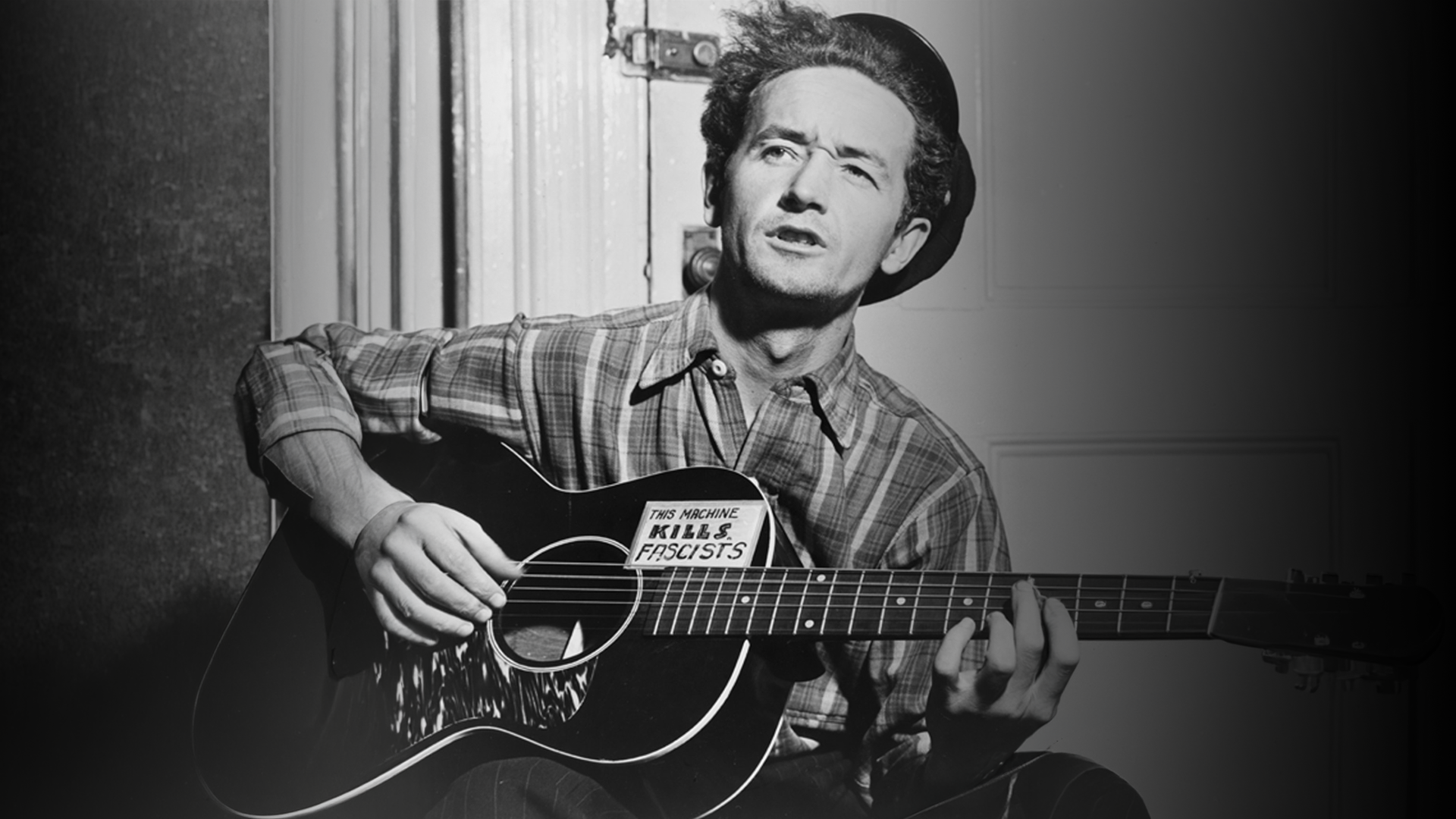
"The union is my religion, the strike is my way of praying, and my picket line is my altar." -Woody Guthrie
I hated unions. I hit that spot in the boomer generation when unions were losing their luster and had begun their long slide from a dominant force in the labor market to near irrelevance. As I came into being as a young professional, such as it was, the unions were becoming known for their leader’s corruption, their political shenanigans, and yes, their members’ greed and incompetence. At least, that is the attitude that the media and pubic perception held. To be fair, some of this was deserved. These were the years just after Jimmy Hoffa’s reign. He was the notorious General President of the International Brotherhood of Teamsters and had ‘alleged’ ties to the Mafia. Ok, he had real ties. He was imprisoned in 1967 for jury tampering, bribery, conspiracy… mail fraud, wire fraud… His sentence was commuted after he resigned his union office. He famously disappeared in 1971, and his death continues to be one of the country’s great conspiracy stories. Like, under his leadership, the union had a hand in the assassination of JFK.
Unions (which preceded the founding of our country, and have always had an adversarial relationship with the ownership class) had come to be seen as greedy, lazy, and a poor workforce. There were stories of grift and graft. Unions called for “unreasonable” raises, benefits, and working conditions. And then, in 1981, the Professional Air Traffic Controllers Association, PATCO, was protesting what they considered to be unfair wages and long work hours. They walked off the job. And two days later, President Ronald Reagan fired more than 11,000 of those who hadn't crossed the picket line. No one thought it would hold - that airport traffic would come to a halt. But the Reagan administration brought in military controllers and trainees almost finished with their studies. Somehow it held, and planes took back the skies. Part of Reagan’s threat was that strikers would never be hired again. Much later, they were allowed to apply for other federal jobs, but not as controllers.
In retrospect, PATCO’s demands were a poorly timed overreach. A baseball strike had already angered the public (those greedy ball players!); there was a recession going on, and the postal union was also threatening a strike. There is a federal law that prohibits strikes by government employees. One thing they thought they could count on: the support of President Reagan, who had been president of the Screen Actors Guild (SAG), leading the union from 1947 to 1952 and again from 1959 to 1960. He had negotiated early health, pension, and television residual benefits for performers. He navigated strikes and internal union politics during the Red Scare and Hollywood blacklist era. Republicans had a different idea for Reagan - PATCO could not count on his support.
Most would agree that the PATCO firings would be the beginning of the end of (modern) union power. It became a textbook case for corporate response to labor strikes and threats. From business school to communications training, capital no longer feared labor - even encouraging strikes so that they could fire workers and hit a salary reset.
At my first big market TeeVee station job, I worked for the news department as an editor. Texas is a “right to work” state: an employer or a union cannot make union membership a requirement to work for a company. The few unions that exist in the state are exceptions. There are teachers’ unions, some unionized fire and police departments, a few municipal worker unions, a trade union here and there… and except for police/fire unions, most are under constant threat by Republicans, limiting their right to recruit, limiting their scope of power, etc.
My first news department did not have a union, of course, but it had an odd little in-house group that included the production staffers (directors, studio personnel, engineers) that operated and negotiated as a union with management. It was generally understood that management was OK with that arrangement; it avoided the threat of a national union coming in, and for many years the station (and many media stations in general) were profitable enough to not quibble over fair salaries, and frankly, simplified those negotiations.
I found myself on the tail end of media broadcasters’ license to print money. Payrolls in general were getting less generous. My starting pay of $6 an hour didn’t go far, and I took part-time jobs to subsidize it. I was convinced that the meritocracy would recognize my enormous talent (!) and remunerate such excellence. A few half-hearted attempts were made to expand the in-house group’s membership to include the newsroom, but salaries had varied wildly over the years, and the effort was always futile. I would find myself being called upon to truck my $ 6-an-hour ass up to one of the production suites to show a union old-timer how to operate some new technology. I got nothing against old-timers, having arrived there just a few minutes ago, but if I was training them on occasion how to do their job? Where I should have wanted to press the case for expanding a union “brotherhood,” it just made me resent them further.
At one of my part-time jobs, I actually did meet someone who recognized my obvious, limitless potential. He offered me a job at a TeeVee station across town. At about three times my then salary. With overtime. You see? The system worked! My work WAS rewarded!
And one day, a colleague at my new station began muttering that WE needed union representation. By then, I was pretty content, why rock the boat? I had been indoctrinated over the years to see the downside and deterioration of unions. I didn’t go out of my way to discourage the votes needed to bring in a national union rep, nor did I campaign for it. I was a supervisor of sorts by then, and it didn’t sit well with me that I might be voting to equalize my pay scale with someone with fewer job qualifications, or less seniority. I EARNED my place, dammit! I credit management with staying out of the discussions, though it was clear they had no union sympathies. When it became even more clear that a vote could very well bring in a union rep, surprise! We were all given raises. Fairly substantial ones. The union rumblings ceased. Ha!
As unions declined, all sorts of efforts were made to promote their importance. This little ditty would stay in your head for decades. It didn't help. Jobs were shipped overseas and cheaper imported goods came flooding in.
It finally began to dawn on me that there must be something to the power of a union, when a (fairly) minor threat could get a good-sized departmental raise. Had I done the math carefully, it would have been clear that a good union contract would have been worth much more, but we got something to placate everyone, immediately, and without the complications.
When I left the security of TeeVee stations to be a “freelancer,” I found out that in order to work jobs for the networks, which was the ultimate goal, I would have to join the union, like it or not. It was not inexpensive. And because a couple of the networks were represented by one union and another couple was repped by another, it would require two membership fees. Expense. Bureaucracy. Paperwork. Arggghhhh! And the benefits offered to freelancers were slightly less than full-time union staffers. Grrrrrr! We had to provide gear for our work, and the unions had no hand in determining the rental rates. WTF?
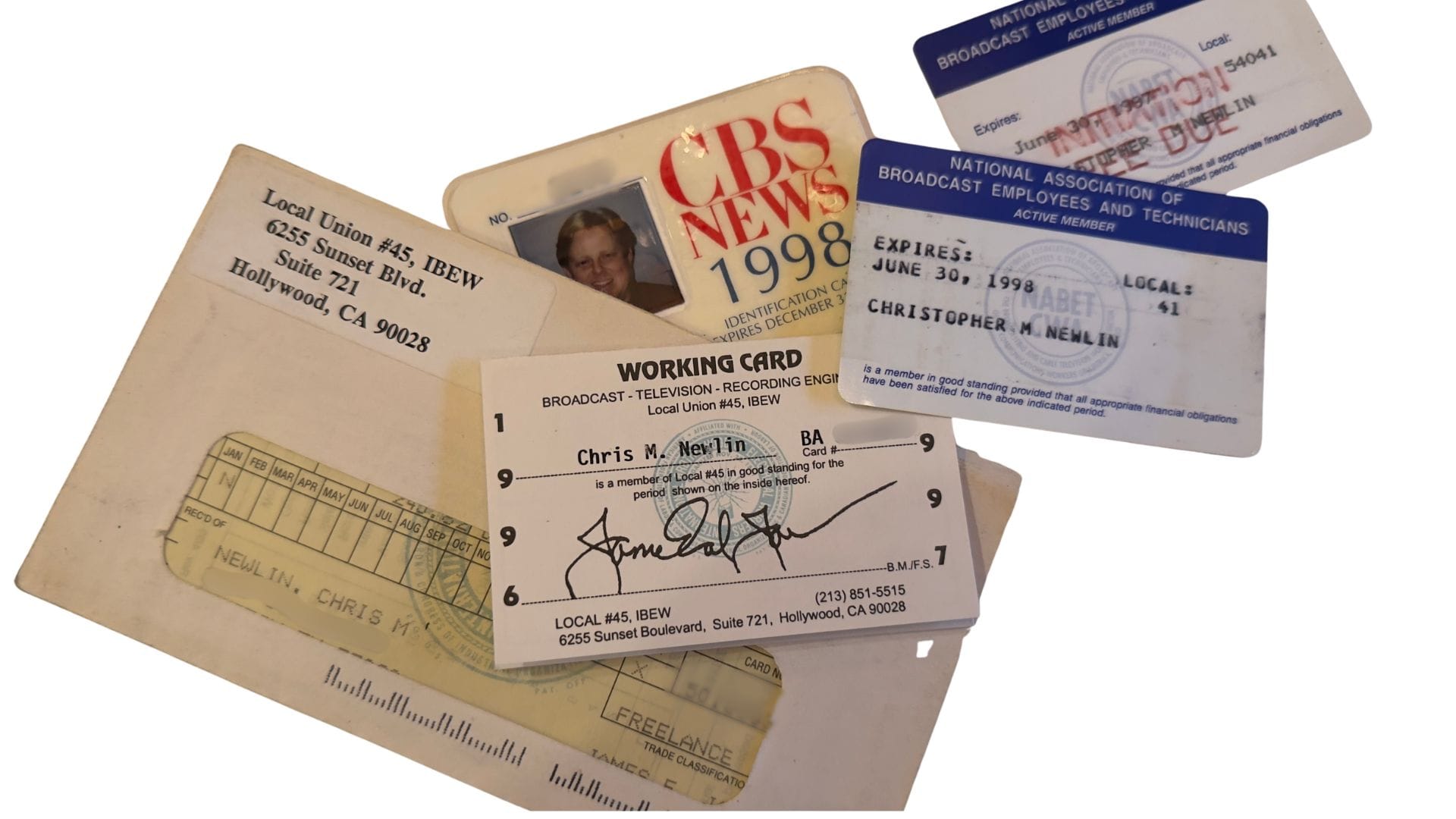
We started- a buddy of mine and I, and a few other colleagues we knew in this type of work- taking any kind of work we could get. Work for corporations, non-profits, ad agencies… all with negotiated “day rates” which included a gear package to shoot and record professional video. There were “industry standard” day rates, overtime expectations, travel expense reimbursements, but we found out that everything was negotiable. Including pay cycles, lunch breaks, length of days, overtime rates, etc. That which wasn’t negotiated would usually err in the client’s favor.
And yes, sometimes lunch breaks were skipped. “Overtime” was misconstrued to mean “flat rates” for an unlimited period. A pay cycle might be an immediate check at the end of the shoot, or 90 days, or more than once, forgotten completely. So there were collection headaches. Even one or two lawsuits. Some never resolved. There was equipment maintenance. Vehicle wear and tear. It was hard, expensive work.
When the network jobs came in, they were even harder work. You might be on the road for a few days. There was more gear to be bought and maintained and carried to achieve higher production values. Network correspondents and anchors were celebrities of sorts, so care was taken to accommodate them. The days were long, and the travel could be fierce.
But here’s the thing. The rates for our work were already negotiated. Overtime was calculated in standard ways. If a meal break was missed, there were “penalties” awarded to you, as there were if you worked a super long day and turned around into an early day the next. Travel rates were standardized, as were per diems, meal allowances, extra gear rentals, etc. When a time card was turned in along with any related expense report, it was generally paid in two or three weeks!
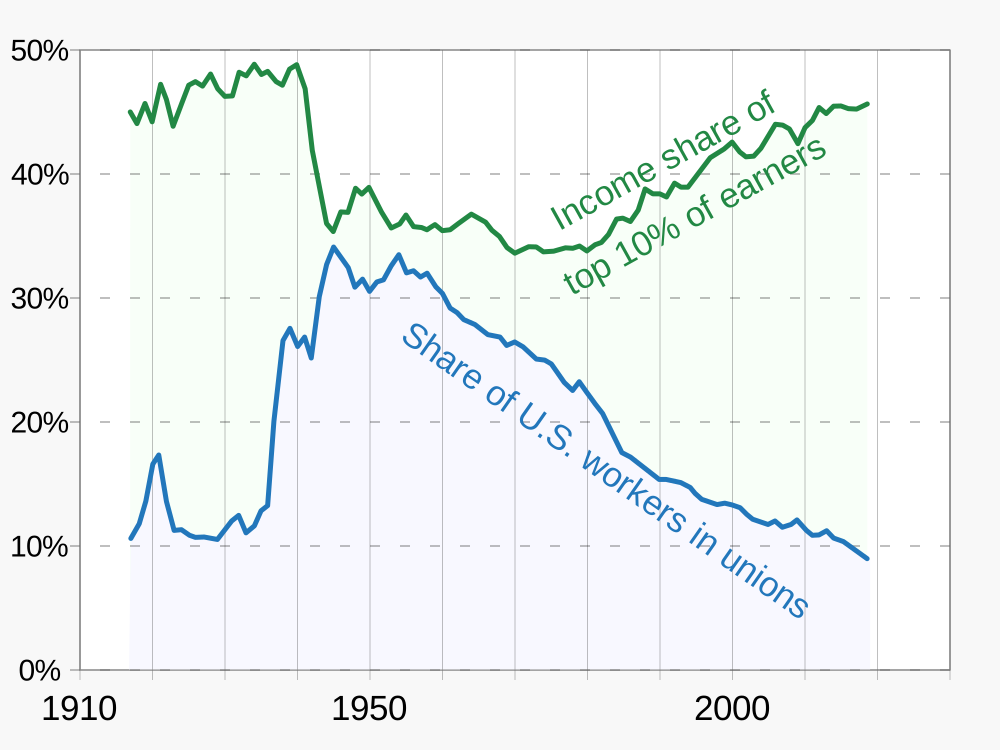
And like any selfish, privileged brat of the modern era, it came to me too late. All of those benefits were earned not just by me, but by the strikers and union organizers and the rank and file who came before me and fought for it. Not just on a picket line or two, but more than a few times in this country - blood. See: the Pullman Strike of the 1890s. The Ludlow Massacre during the Coalfield Wars of 1914. The Great Railroad Strike of 1922. And countless violent strikes in every labor sector.
When I switched my career away from network travel toward corporate work (I wanted to stay home after I got married and had a kid), I found it to be even more difficult (and expensive) to navigate than before. Technology marches on, and I found myself competing against younger, well-trained people willing to work for low starting wages (as I had) but without a way up. Using cheaper technical gear and willing to work longer hours and make greater concessions to their corporate clients.
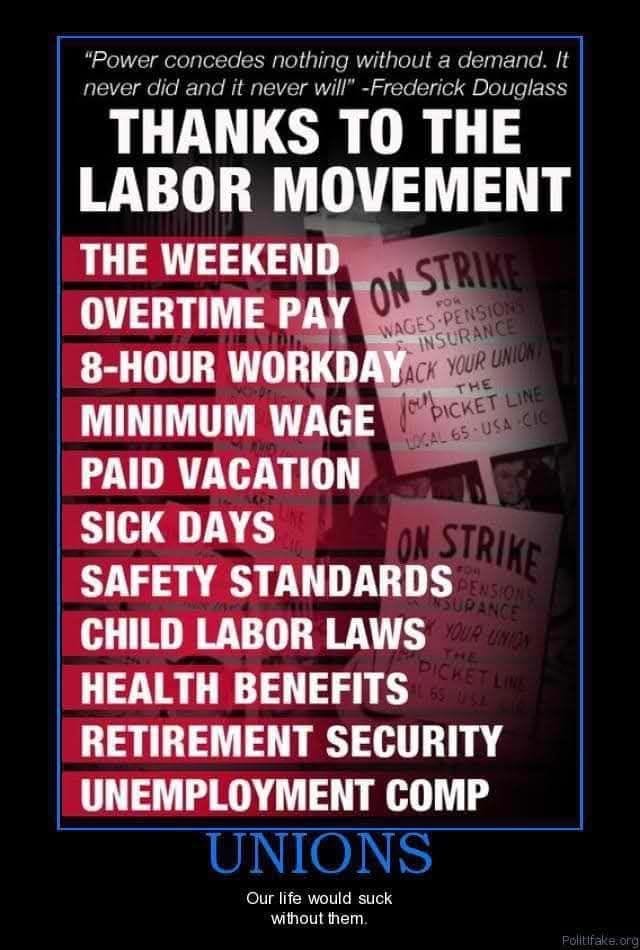
The GOP march against labor continues. As in times before, paying dues can seem onerous. Participation means meetings and voting and bureaucracy and politicking and vigilance against corruption. It means forming lasting institutions, and especially it means fighting the message machine that unions are a commie plot. Or that they reward lazy "dumocrats". The propaganda against unions, like all things in our modern political world, can seem overwhelming and even dangerous.

And now AI has arrived. Hollywood unions are having to fight to keep their members' likenesses from being used without significant compensation. Designers, writers, graphic artists, software coders, musicians, marketers, journalists... all are being displaced by the likes of ChatGPT, Claude, Gemini, and the like. I don't think that AI will be paying dues to the AFL-CIO.
This last weekend was Labor Day. (Which is why many folks had a three-day weekend. But you knew that, right? Right? The president of the United States paid lip service to the holiday. Made no appearances with unions, labor groups, or the millions of blue-collar workers who believed him when he vowed he would ‘always’ be labor’s friend. Republicans cheered him on. They've been trying to destroy organized labor since FDR expanded their protections and gave them political legitimacy. They're closer to accomplishing that now, more than ever.
You bet AI is here. And it's willing to work for nothing and for unlimited hours. Just like I shrugged off unions, arrogantly thinking that I was just fine, even excelling, by going it alone, the ownership class is ready to exploit that kind of hubris. Their message megaphone will divide us up. just like it did me. And they will replace every worker they can with AI. Only this time, it won't be just low-level blue-collar workers; the entire middle class is at risk. Unless people see the value of standing up, organizing, and 'Stickin' to the Union.'