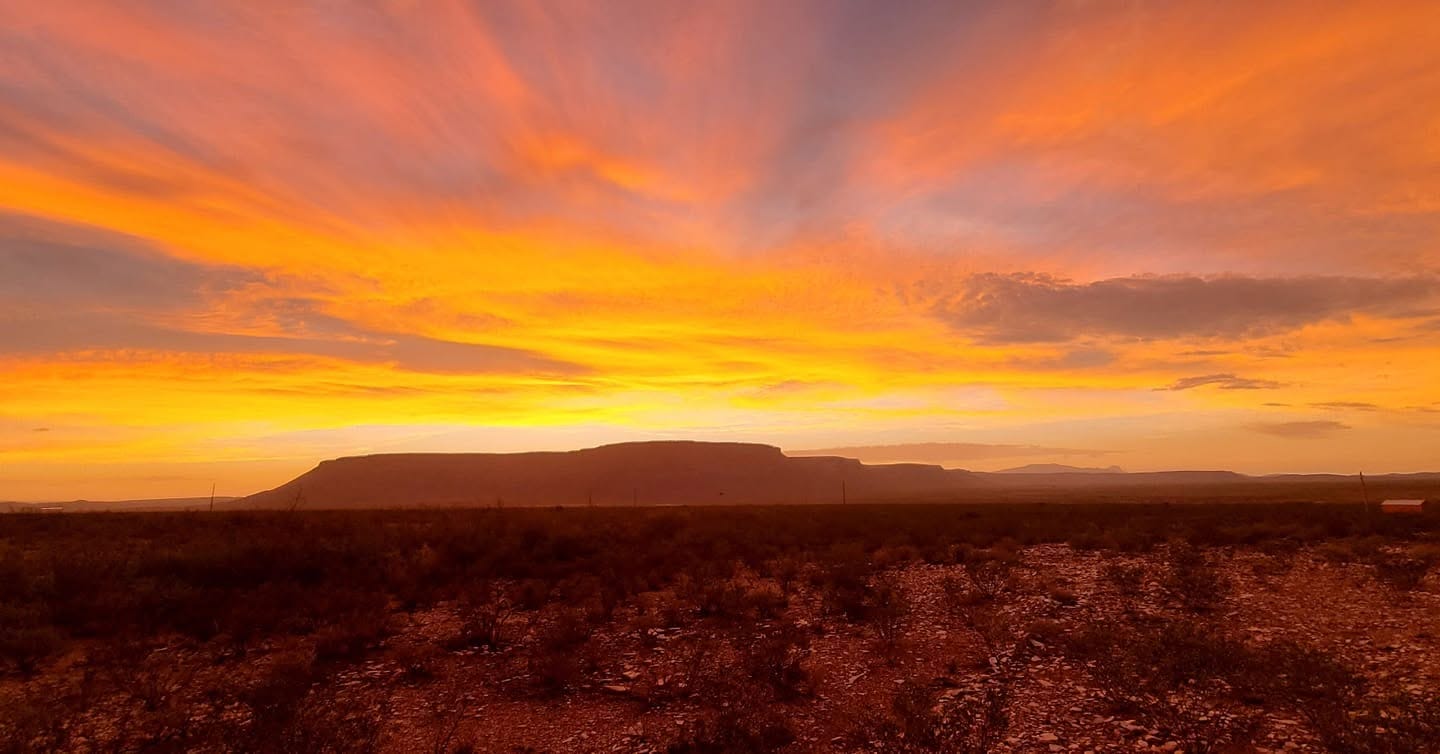
Terlingua Creek
"Where once hundreds had lived in chosen isolation, there are now thousands, a dollar store, coffee shops, boutiques, and glass domes for rent on websites that enable weekenders to lie abed and parse the constellations. In the end, all things become Airbnb, and money runs through it."

“Do not grow old, no matter how long you live. Never cease to stand like curious children before the great mystery into which we were born.” ~Albert Einstein

Approaching Presidio from the north on Highway 67, there is a false sense you will arrive in a charming mountain village. Passing the silver mining ghost town of Shafter, as the road settles toward the Presidio Bolson drainage basin, the Chinati Range fills the distance to the west, marking the water course of the big river on the Mexican border. Ahead, a distant purple wall, visible even through the hazy summer heat, stands as a backdrop to the location known to historians, researchers, and locals as La Junta de los Rios, the junction of two rivers, the Rio Grande, and the Rio Conchos, which runs up toward the U.S. through the fertile bottomlands of Northern Mexico. La Junta is one of the oldest known habitats of humans in North America; archaeologists claim pottery shards and other detritus dug up through the decades put the time of early occupation at ten thousand years ago.
The Sierra Ricas, southeast of Ojinaga, have peaks approaching 8000 feet above sea level, and like the Chisos Range down river in Big Bend National Park, have pine and oak forests almost ecologically disconnected from the desert floor above which they hover. Mexico sets the Ricas in the Cañón de Santa Elena protected zone. The drainage basin, with its thousands of feet of sediment from ancient and historic floods, and the town of Presidio, are framed on the west and eastern sides by serrated mountain horizons and the cool air at those elevations fools travelers into thinking they are about to arrive in a pleasant escape from a desert day. Instead, the road takes them into a community frequently recognized by the National Weather Service as the hottest location in the continental U.S.
The glories of Presidio’s geography and history, I’m afraid, belie its attendant sadnesses.
“Always looks pretty from up here on the highway,” Gary said.
“Yep, but the perspective sure changes the closer you get,” I said.
“I’m looking forward to the River Road again.” The helmet head set made his voice as clear as if we were sitting across a table having coffee and talking. “But we need to ride up into the Chinati’s some time.”
“And get some dirt bikes and ride Pinto Canyon Road one of these days, too.”
We were motorcycling down from Marfa, America’s too cute town of artists, millionaires, and struggling service workers. The previous night we had camped and tried to sleep at what amounted to a KOA (Kampgrounds of America) for hipsters a half mile south of town. Our tents were put up free standing on a gravel and scrub weed surface, a privilege for which we paid $30 via credit card. The spot might have better served as a parking lot for the monied travelers burning a few hundred dollars a night to take their rest in teepees with wooden floors or refurbished mid-century travel trailers, often described as “darling.” Any REM sleep we aspired to was abbreviated by vehicles pulling up with lights blaring across the desert darkness and into our tents, which was only a prelude to howling coyotes, overnight truckers engine braking as they approached the village limits, and the soul-rattling wail of the Union Pacific train making its 3 a.m. passage through the Texas Trans Pecos.
There was also a brief session of projectile vomiting.
We had dined in the Paisano Hotel, often described with the modifier of “historic," more for the cast of movie stars who had resided there than for the architect Henry Trost, who had designed government buildings and hotels in the early 20th century from Tucson to Marathon, Texas. The restaurant, set against a calming courtyard with a large fountain, was named after the protagonist, Jett Rink, in Edna Ferber’s novel “Giant.” Stars of the eponymous movie, shot just outside of town, had stayed at the Paisano and gave the isolated accommodations a reputation closely associated with Rock Hudson and Elizabeth Taylor, James Dean, Dennis Hopper, and Hollywood’s biggest director at the time, George Stevens. The restaurant has never achieved any such greatness.
Gary, my long-time motorcycling pal, had decided he was going to pay for my birthday dinner at Jett’s. My resistance proved futile. I recall a juicy steak with an unusual jalapeno seasoning and jalapeno gravy over mashed potatoes and maybe even a jalapeno martini and a subsequent shot of tequila to cap the meal. The heat and spiciness of all food is measured in Scoville Heat Units (SHU), and the jalapeno is considered moderate with a level that ranges from 2500 to 8000 SHU, which is considerably milder than the habanero pepper that registers 100,000. My gastro-intestinal system was unable to make the distinction and was not fortified for such an assault, particularly when mixed with alcohol. In a few hours, I hastily unzipped my tent flaps and blew out a stream of a partially digested $100 meal into the desert wastes, an enduring travel memory and a graphic insult to my buddy’s kindness.
“Should we stop for the green chili enchiladas?” I asked Gary on the intercom.
“You tell me. We got time? You got stomach?”
“Not sure, if we want to make Terlingua by dark, and I do. Don’t want to ride the River Road in low light, and especially not in no light.”
“Yeah, but a town known mostly for its enchiladas and day time temperatures deserves a little love.”
“We better keep going, dood. It’s a long ride over there, and I’m not certain I’ve recovered from last night’s revery.”
Presidio began to look in spots like an un-zoned junkyard, empty warehouses, rusted automobile chassis, sagging fence lines, and storage tanks of various sizes and colors, led the way into town and the international crossing point. Border Patrol agents consider the assignment there to be almost a sentence of exile and live in groups of small, boxy houses with their families, unprotected from the sun, which becomes, after enough time, almost frightful to feel and see. Presidio struggles to be known as more than a lost outpost at the bottom of America but whatever bi-national charms it has tried to market will soon be overcome by the border wall. The federal government gave a no-bid, almost $2 billion contract to a company to erect giant, metal bollards on the north bank of the Rio Grande. The graders and flatbed trucks and construction workers and engineers are already arriving daily from the ghost town of Lobo, upriver, where the detested resources, men, and materiel are being staged. The monolithic structure may reach across the city’s limits.
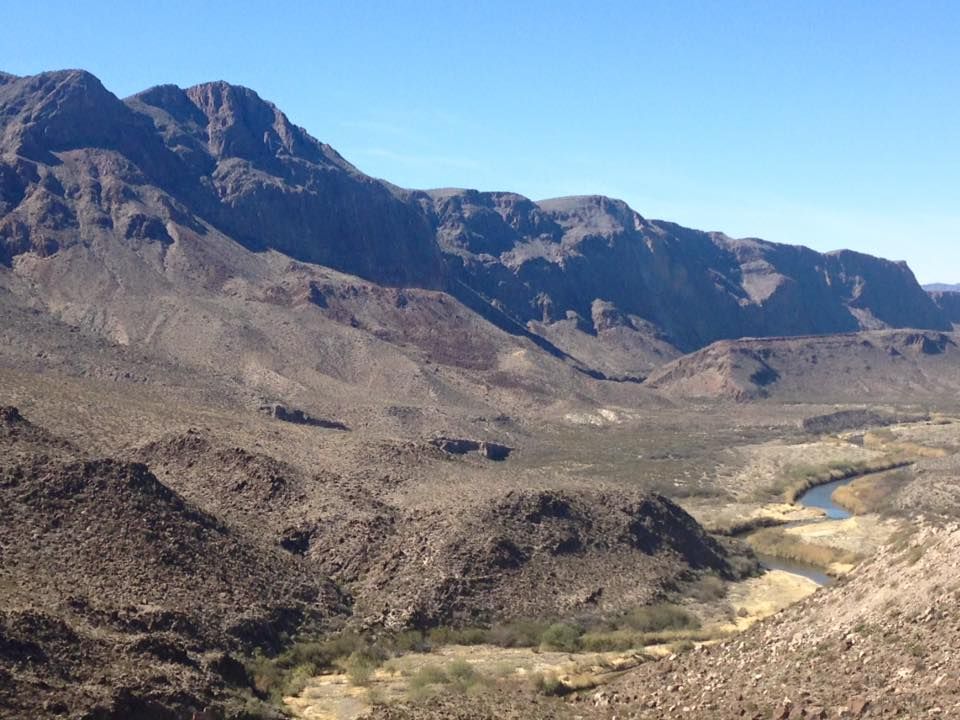
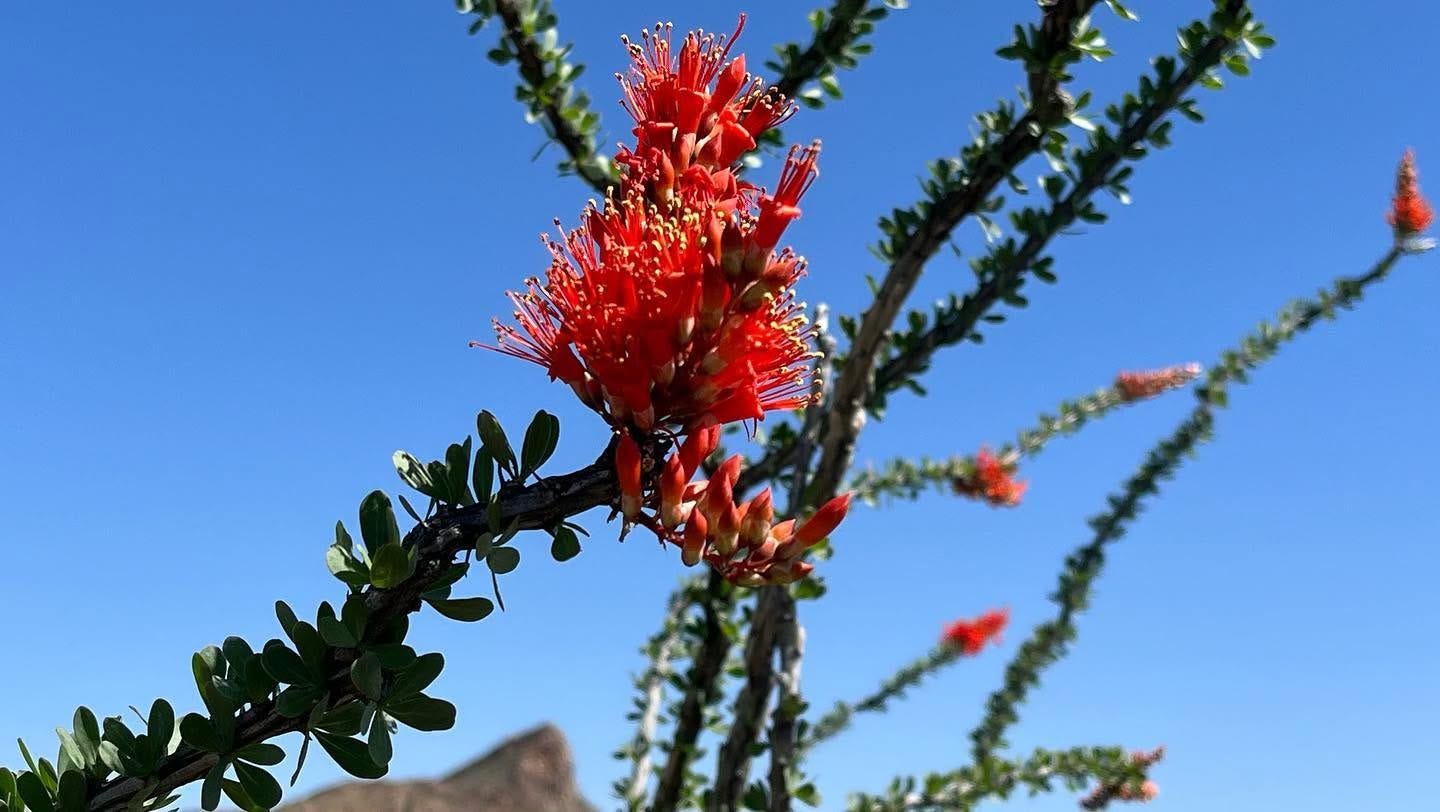
Ranch to Market 170, hugging the north bank of the Rio Grande east of Presidio as it crosses Alamito Creek and enters Big Bend State Park, offers an immediate lesson in geographic time with a young river cutting through an old volcano. The rider sees thorn and stone on the slopes set against a green ribbon of life at the water. Canebrakes stand up after you have passed farms drawing water to irrigate crops and then after a few more miles Chihuahuan Desert scrub proliferates. Lechuguilla spikes out of the rock, creosote bush perfumes the air after rain, ocotillo leafs out green within days of a shower and flames red-orange at the tips in spring. There is little alive that shows more stark beauty than a blooming ocotillo in the desert. Candelilla, the wax plant that supported a whole borderland smuggling economy a century ago, grows on the limestone ledges, along with prickly pear, cholla, sotol, agave, and chino grama grass on the slopes.
We rose on our motorcycles into the heart of the Trans-Pecos volcanic field in Big Bend State Park toward the Bofecillos Mountains, the eroded remains of a major volcanic center active roughly 27 to 28 million years ago. Nearly everything the road touches is its debris, which includes stacked lava flows, ash-flow tuffs, dikes, and volcanic necks. Colorado Canyon is a geological rarity, the only stretch where the Rio Grande cuts through igneous rock rather than the Cretaceous limestone that walls its other canyons, sawing down through dark lavas and welded tuff. The Hoodoos near the Big Hill are balanced remnants of the lava fields, sculpted by wind and water. The Rio Grande is a geologically youthful river that integrated the closed desert basins of this stretch of road only within the last couple of million years, which is why it seems to wander improbably through mountains rather than around them.
“I don’t think we’re going to make Terlingua,” Gary said.
“Not likely. Not sure I care. But not many places to camp after the Big Hill, except a commercial place in Lajitas.”
“There is that one RV park but they have grassy spots for tent camping,” he said. “And a big bonus is hot showers and a cold beer across the road.”
“Sounds like you’ve decided.”
“Yeah, it’s off-season. I don’t think we’ll have to listen to RV generators running all night.”
“You’ve even written their marketing campaign.”
Our tents were up before dark and we did not make it across the road for a beer. I’ve always had a bit of disdain for the Lajitas mockup of the West. They have built a golf course along the Rio Grande, using precious water to keep it green in the hot and rocky heart of the desert. Not far from the first tee box is a low spot in the river where General Black Jack Pershing crossed into Mexico with his troopers in a fruitless pursuit of Pancho Villa, the Mexican revolutionary who had brought terror onto American soil with his attack on the border town of Columbus, New Mexico. Barracks where Pershing’s men were bivouacked have been restored and made into guest rooms costing more for one night than what Pershing probably earned in a month’s salary.
Light was suddenly flashing through the nylon sides of my tent. Gary saw it, too, and said it was nothing we needed to fret.
“That lightning must be a hundred miles off,” he said. “Doubt it ever gets close to us.”
“Sure as hell hope not.” I was dozing off, beat up from the heat and the wind and the miles just as heavy raindrops splattered against my tent. “This isn’t missing us. I think it’s going to get bad.”
“Maybe. I’m just gonna pull up my bag tight and see if I can sleep through it,” Gary said.
In minutes, water was flowing into my tent, zipped tight, and the wind came down off the mesas with a force that turned the nylon into a sail or an airfoil, either of which was certain to send me airborne.
“I’m outta here, Gary,” I said. “I’m running up to the clubhouse.”
“You’re crazy.”
I was soaked before I took a step and the rain felt like ice pellets on my bare arms. Lightning was so consistent I was able to get enough flashing illumination to make my way across the campground and reach the front door of the nearest building, which was the clubhouse. It was locked. Behind me, there were bright fluorescents in a laundry room, and when I tried it, the door opened. The air conditioning must have been turned down to frigid. I was wet and shaking with the cold and lay down on a hard table where people folded their clothes. Sleep was impossible, and I soon saw Gary leaning against the wind and torrents on his way toward the laundromat. If we had gone around to the other side of the clubhouse, we would have discovered unlocked double doors and would have been able to enter and sleep on warm, dry, soft couches.
Instead, we stood and shivered in the AC, waiting for first light. My tent, I discovered, had been blown into a stand of prickly pear and the nylon was shredded on the needles, strands of orange fluttered in the breeze. The sleeping bag was gone with the storm. After gathering what was left of our gear, we packed our bikes and left for Terlingua. I had spent many enjoyable hours there on the porch of the general store, looking east to see the sunset put the Chisos Mountains aglow in often unknown coloration. The cinnabar mined in the hills along the river near Terlingua had provided mercury for bombs and less violent types of manufacturing. An international chili cook-off had brought attention to the locale after the mines had played out and mercury had lost its utility for electronic switching. Where once hundreds had lived in chosen isolation, there are now thousands, a dollar store, coffee shops, boutiques, and glass domes for rent on web sites that enable weekenders to lie abed and parse the constellations. In the end, all things become Airbnb, and money runs through it.
“Uh oh,” I said.
“What now?”
I was a hundred yards in front of Gary and had topped a rise before Terlingua Creek. The ranch to market road intersected the normally dry creek bed with a low-water crossing instead of a bridge since there was rarely moving, live water.
“It’s Terlingua Creek, man. You aren’t gonna believe it when you get over the hill. Looks to be at least five feet of water across the road. We aren’t getting through here today, that’s for sure.”
“Holy crap.” Gary stopped his bike next to mine and we walked up to the edge of the water and mud blocking our egress. “What do we do now?”
“Only option is to turn around and go back River Road to Presidio and up to Marfa and then head east to Alpine and home.”
“Kinda outta the way, though.”
I shrugged, pointed at the obstruction of the thoroughfare, put my helmet on, and got back on my bike. We went west, anxious enough to turn north that we did not even stop at the Big Hill for the traditional gazing and gaping at the scenery where the Rio Grande shrank and snaked into the horizon. An hour later we came upon Alamito Creek and graders trying to blade a clearance through the mud and gravel and rushing water that covered the chip sealed roadbed. A highway worker said they hoped to have traffic moving again by the end of the day. We rode back toward Terlingua, our third run on the River Road in 24 hours.
About twenty minutes to the east, mud and gravel had come down a talus slide and made a fifty foot wide mound across the two lane. There were tire tracks through it, probably a four-wheel drive, and there appeared to be some supportive hardness to the mess.
“What do you think?” I asked Gary. “Should we give it a try?”
“No other choices are there, except go back to Alamito and sleep by the road and wait for the water to go down.”
“Looks like if I can put my tires in the car tracks, I won’t sink into the mud.”
“Good luck. I’ll be here waiting and watching.”
The motorcycle, about 900 pounds with a full gas tank, sank into the mud up to the skid plate about half the distance across the muck. I teased the throttle and spun up mud, sinking deeper. I got off and walked back to where Gary was enjoying the scene with his kickstand down and helmet off.
“Got any ideas?”
“Wait for a new ice age, maybe?”
Thirty minutes passed before a pickup came around the mesa and stopped. The driver, white-haired and at least 70, got out and smiled.
“This the kind of excitement I was looking for when I retired,” he said. “I assume you need some help.”
“Yeah, but it’s going to need more than muscle to get freed up,” I said. “Any chance you’ve got chain?”
“Even better, I carry a nylon tow strap. Let’s get ya outta there.”
We hooked the strap around the bike’s frame, just behind the front fork, and he looped it through a hook on the back of his F-150. I was barely able to keep the bike from falling over into the mud even though he pulled slowly and with great caution. When I was out, Gary ran straight across the tire tracks without a problem. I’m sure he was smiling underneath his closed helmet.
By the time we returned to Terlingua, the creek was down and the road had been opened. There was still mud and gravel and some water moving, but we were out of patience. After too much discussion, we chose to plow through and crossed without incident as a few other motorcyclists stood by pointing and laughing, hoping for our demise, I suspect. Running north on 118 toward Alpine, I remembered the time Jake and I were racing to avoid feral hogs in the ditches at dusk, and we did not notice a line of thunderheads building in front of the sunset. We avoided the wild animals, but the storm with hail the size of marbles caught us out in the open near Kokernot Mesa. We pulled onto the shoulder and waited for the rain to ease, but we didn’t mind being cold and wet.
Few things are more beautiful and memorable than standing in a rainstorm in the American West.