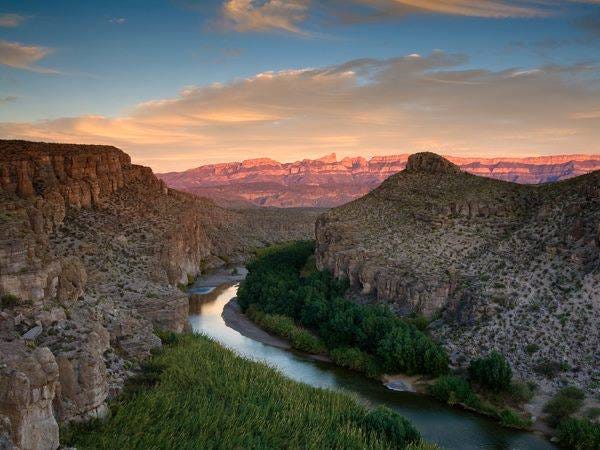
The Border Wall and All Y'all
You cannot find a breathing soul out in the Big Bend region who wants a wall. Elected officeholders, Republican and conservative, see it as a disaster, economically and aesthetically.

“In the souls of the people the grapes of wrath are filling and growing heavy.” — John Steinbeck

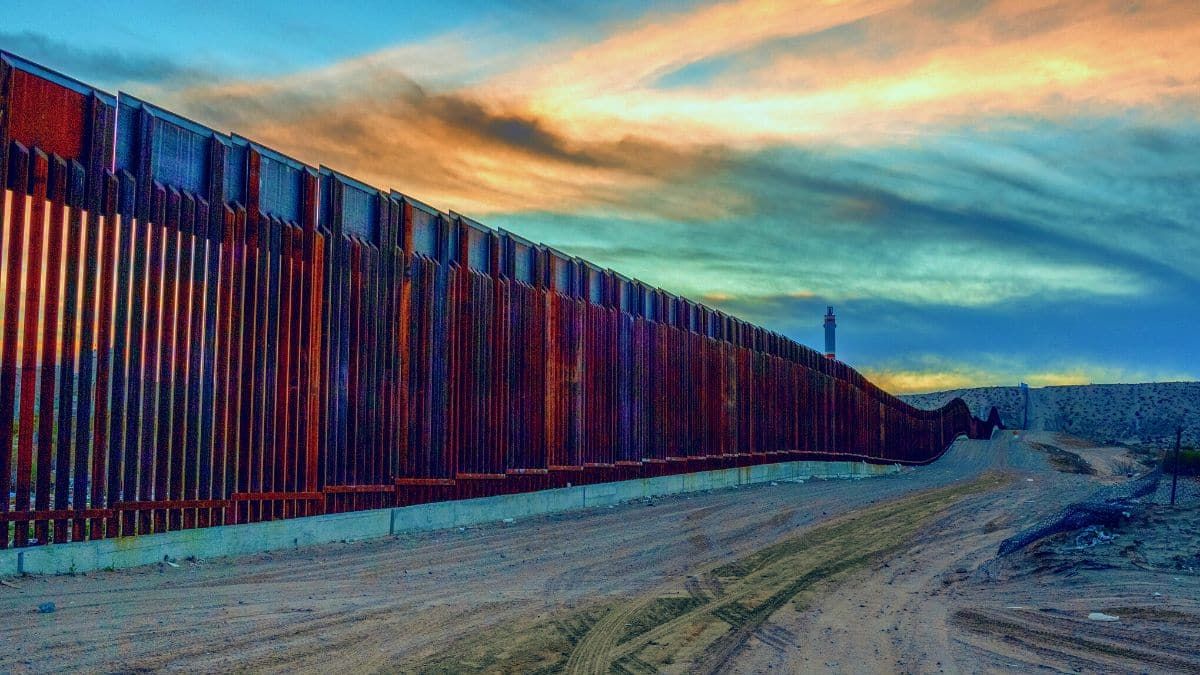
My tendency has been to want to write a requiem for the Big Bend region of the Texas Trans Pecos because of the looming intrusion of a border wall. If you have never been there, the absurdity of Trump’s determination to erect a physical and electronic barrier cannot be accurately calculated, emotionally or intellectually. The plans, according to documents from the Department of Homeland Security (DHS), include the monolithic wall’s construction through both Big Bend Ranch State Park and Big Bend National Park, bisecting spots with the most popular views, hiking, and access to the Rio Grande. Those of us who love the Big Bend were fools to comfort ourselves with the notion that no administration would waste time and money erecting a physical barrier in a land where the geography is already as intimidating as it is beautiful.
There is no need for such wastefulness of resources and ruination of an epic landscape. Proposed construction of the physical wall will run along the Rio Grande from Fort Quitman, which is 80 miles southeast of El Paso, across some of the most desolate and deserted reaches of American soil, down through Presidio before encroaching the boundaries of the state and national parks. Anyone crossing the border in that stretch of frontier is endangering their lives with exposure to the elements in the open desert and endless miles of walking without water. They are also very unlikely to be drug couriers since the odds of survival to delivery are mostly nil.
The Big Bend sector of the Border Patrol tends to be a threat only to those daring to transit, and their numbers are small, unworthy of a giant, ugly wall. The area of responsibility assigned to the sector runs about 300 river miles from Sierra Blanca to near Sanderson, Texas. According to the statistics from the agency for the month of December 2025, only 178 persons were apprehended crossing illegally. ICE woman Kristi Noem claims there were 89,000 arrests in a four-year period in the Big Bend sector, a number not readily available on the agency’s data-bearing website. She is sufficiently frightened, however, that she has signed a waiver to circumvent 28 laws designed to protect cultural resources and the border environment, including the National Environmental Policy Act, the Endangered Species Act, the Clean Water Act, the Clean Air Act, and the National Historic Preservation Act, a move that authorizes the project. One of those, the Wild and Scenic Rivers Act, safeguards the ecologically delicate balance of water courses like the Rio Grande.
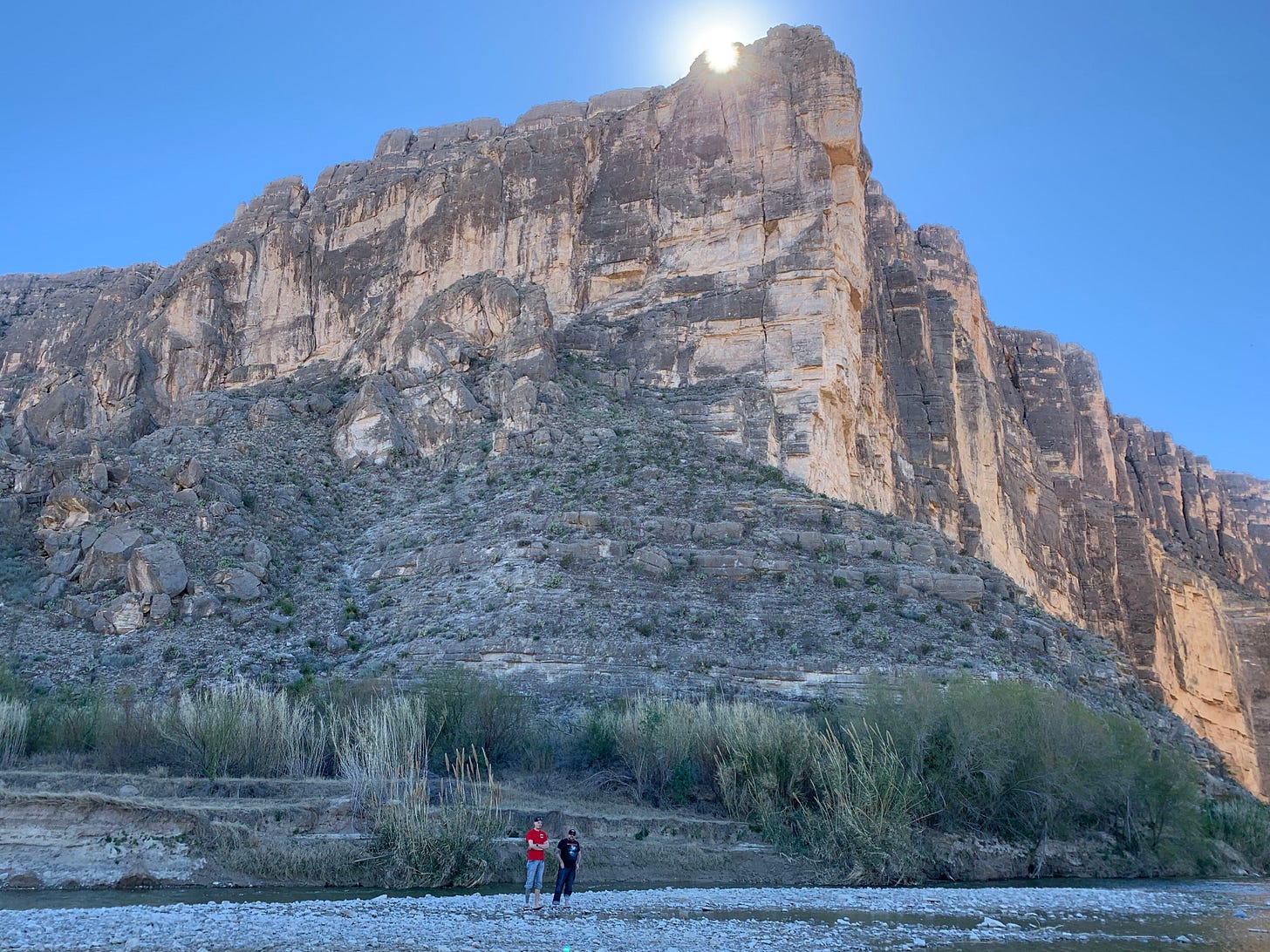
Residents and visitors to the Big Bend have consoled themselves with the conviction that nobody would be stupid enough to destroy the natural splendor of the state and national parks by putting up a wall and floating barriers. People thought, of course, a wall made neither financial nor strategic sense in deterring illegal immigration, and it does not. The giant mesas, talus slides, ocotillo thorns, rattlesnakes, mountains, bears and coyotes, canyons, lack of water, and unrelenting desert heat have long provided historic obstruction to American dreamers from south of the border thinking about crossing in the Big Bend. Canyon walls in Santa Elena, Boquillas, and Mariscal reach, in some spots, as high as 1500 feet. Those are, unsurprisingly, the only geographic sanctums where the government is not planning an intrusion.
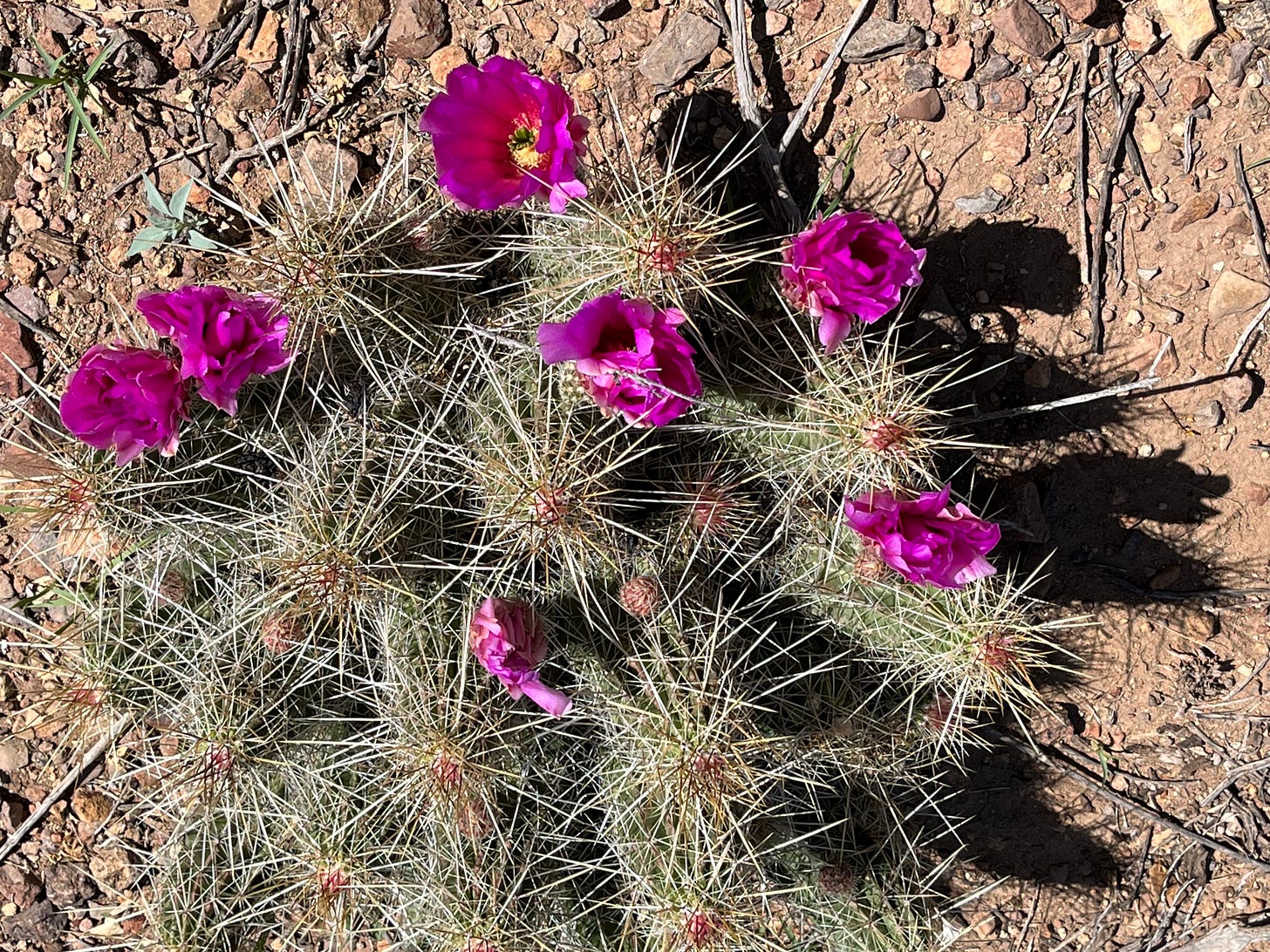
You cannot find a breathing soul out here who wants a wall. Elected officeholders, Republican and conservative, see it as a disaster, economically and aesthetically. The national park, considered by many to be the most remote in the U.S., attracts half a million visitors annually, and the overwhelming majority of them stop to eat or stay in the small towns along U.S. 90 about an hour north of the Rio Grande and the Chisos Mountains, where Emory Peak rises 7825 feet above the desert floor. Tourists and adventurers are not likely to spend their vacations booking river trips along barbed wire buoys or hiking up to vistas obscured and diminished by rusting brown bollards distorting the horizons. The harm to be measured in dollars may not transcend the emotional and psychological pain, but it will hurt and damage lives and create economic desperation where none had previously existed.
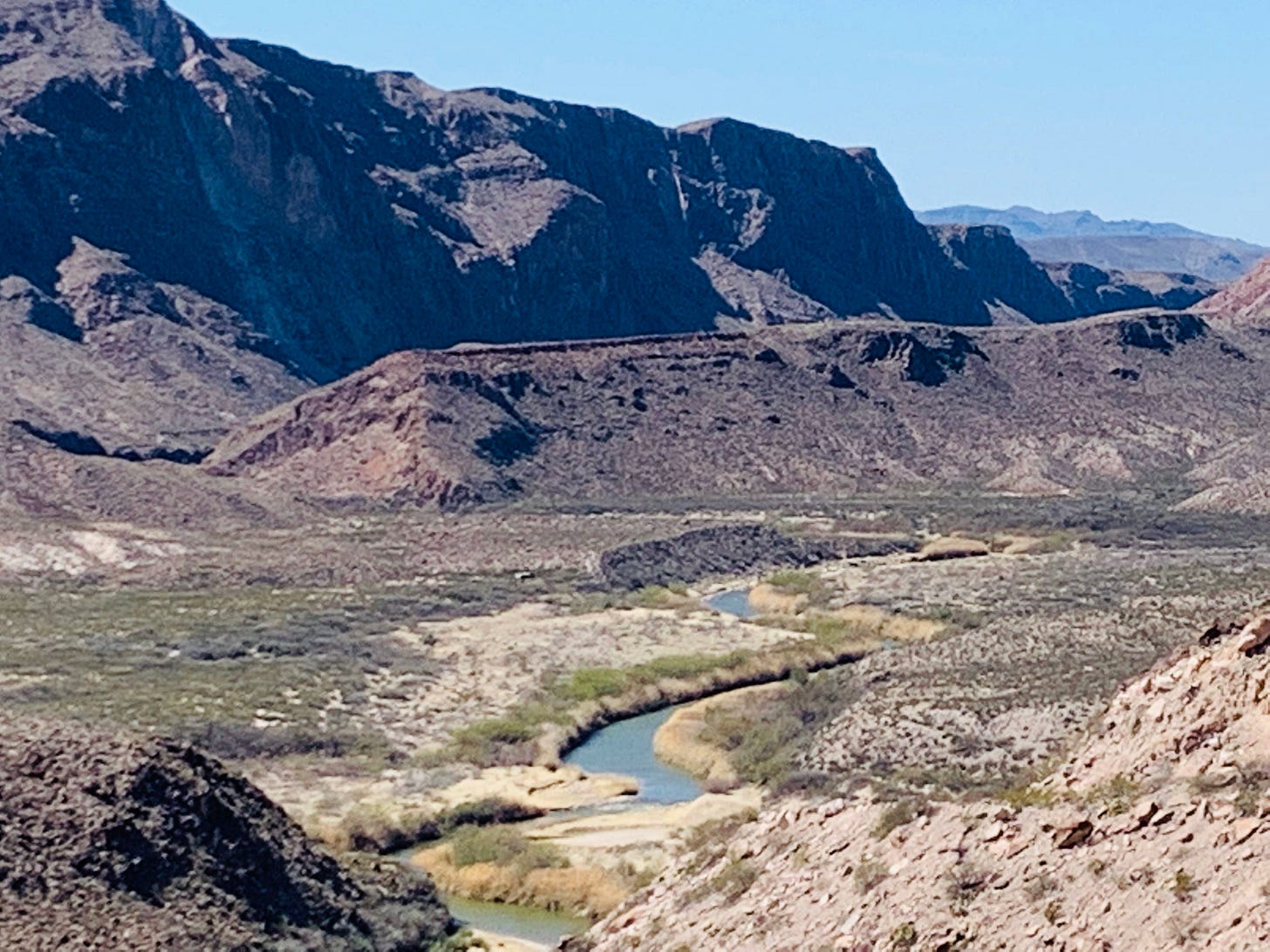
The Department of Homeland Security had previously said there would be no physical incursions of the wall into the two parks and security would be managed with technology like sensors and lights and cameras. Governments frequently lie, of course, and none as prolifically as Trump’s, which means there are now plans for a physical wall in Big Bend National Park. The current map shows it cutting visitors off from the popular hot springs near Rio Grande Village and will put an end to tourist crossings to the stranded Mexican settlement of Boquillas, a community that exists largely off the adventurous taking a row boat across to sit burros and go up the hill to eat, drink, and dream. The romanticism of the Big Bend will be just one of the casualties of these outlandish plans.
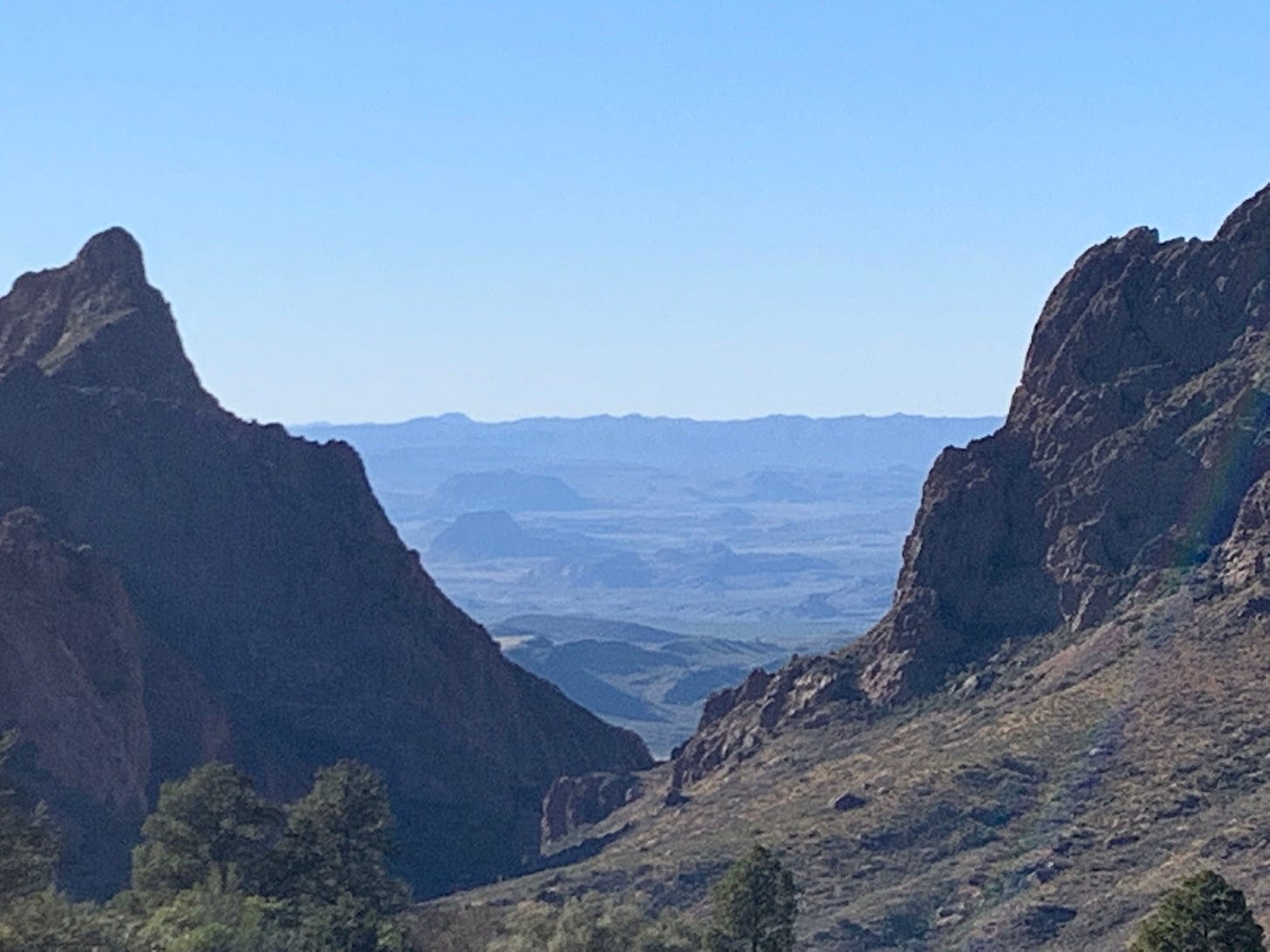
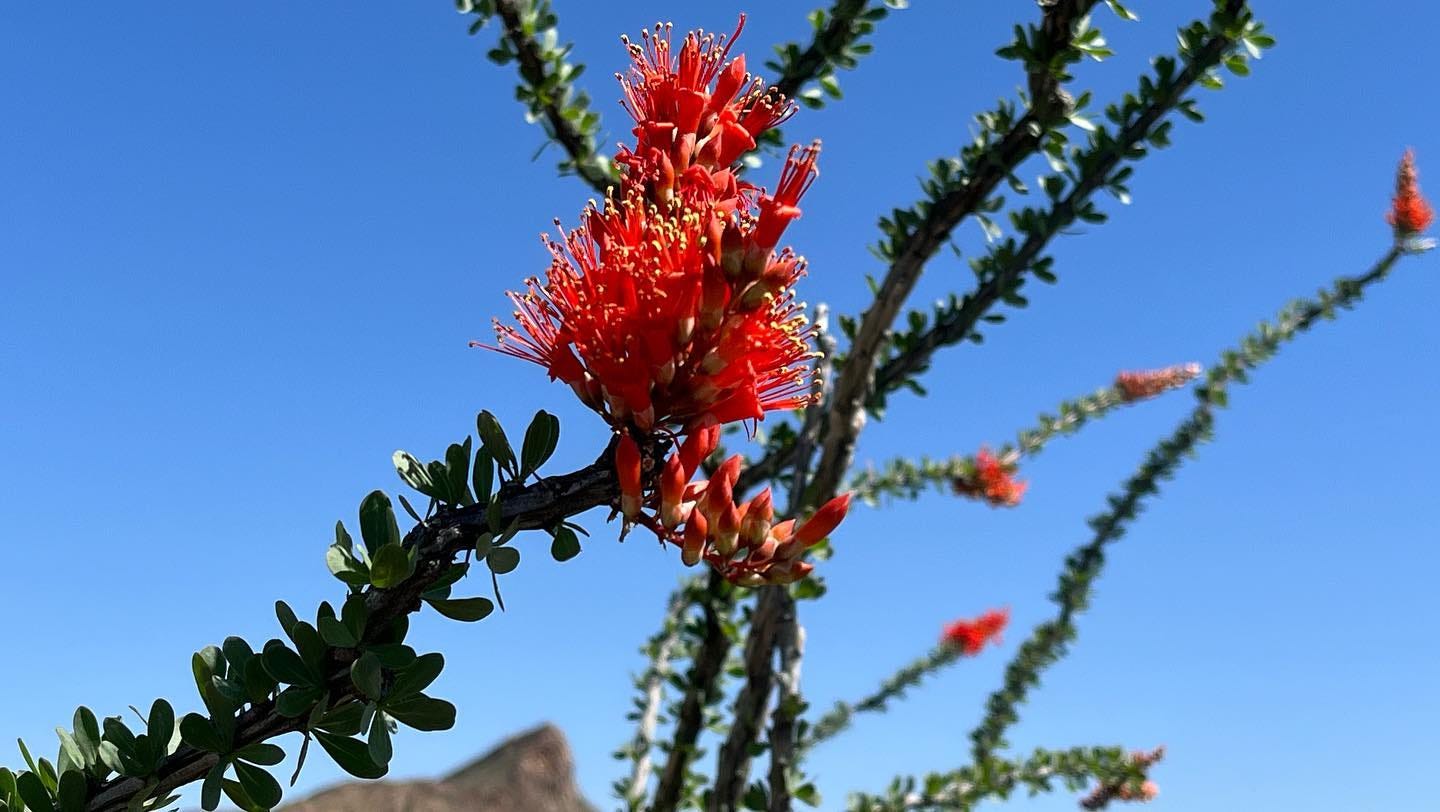
If you have never been, go there now for the spring to see the tiny red blooms of the ocotillo and the yellow and pink cactus flowers of the prickly pear or the stands of purple lupens leaning in the desert wind. Take the hike up the South Rim trail for a day and look across the desert 2000 feet below before a wall stands and destroys the vista, and hurry to the hot springs and soak beside the eternal movements of water against rock and consider the rowboat to Boquillas where Mexicans still forgive Americans for enabling the sins of their government. Walk along Dog Canyon Trail and take a ride down Ross Maxwell Drive, stop atop Sotol Vista and look toward Santa Elena and the grandeur carved by the eons of wind, water, and incomprehensible tectonic forces.
My favorite scene is at the crest of what the locals call “the big hill” on Ranch Road 170, known as the River Road because it traces the course of the Rio Grande. At the tourist pull-off, there is a view of the river reaching toward the west and the town of Presidio. Although I’ve been coming to the Big Bend region for almost 50 years, I’ve never grown tired of the great expanses and their unknowable mysteries. I found the park in my youth, on a motorcycle trip, and have not lost the inexplicable connection I carry with me like an emotional salve. I wonder if the wall down here is just one more atrocity from the Trump administration that Americans are willing to abide. I only know that if a monstrosity is constructed through the midst of the desert park’s beauty, I will never return, and will remember it like a lost, old friend.
But it will be the toughest good-bye of my life.